Justice K.S. Puttaswamy (Retd.) vs Union of India (2017)
Justice K.S. Puttaswamy (Retd.) v. Union of India (2017): Right to Privacy as a Fundamental Right Introduction The Justice K.S....
Read moreDetails

Justice K.S. Puttaswamy (Retd.) v. Union of India (2017): Right to Privacy as a Fundamental Right Introduction The Justice K.S....
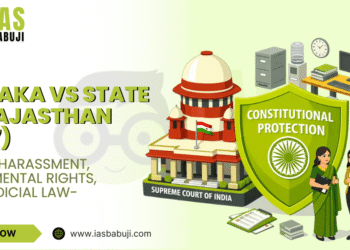
Read moreDetailsVishaka vs State of Rajasthan (1997): Sexual Harassment, Fundamental Rights, and Judicial Law-Making Introduction The Vishaka v. State of Rajasthan...
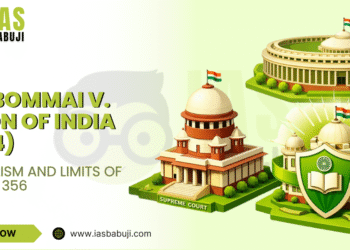
Read moreDetailsS.R. Bommai v. Union of India (1994): Federalism and Limits of Article 356 Introduction The S.R. Bommai v. Union of...
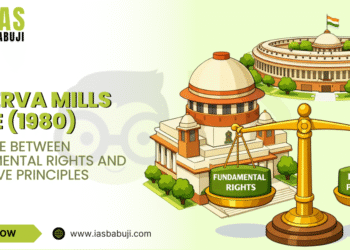
Read moreDetailsMinerva Mills Case (1980): Balance Between Fundamental Rights and Directive Principles Introduction The Minerva Mills Ltd. v. Union of India...
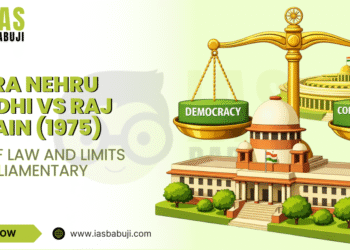
Read moreDetailsIndira Nehru Gandhi vs Raj Narain (1975): Rule of Law and Limits of Parliamentary Power Introduction The Indira Nehru Gandhi...
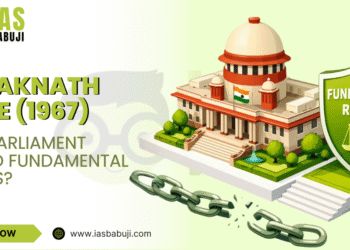
Read moreDetailsGolaknath Case (1967): Can Parliament Amend Fundamental Rights? Introduction The Golaknath v. State of Punjab (1967) case is a landmark...
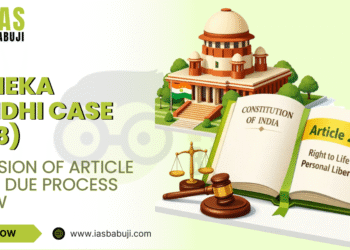
Read moreDetailsManeka Gandhi Case (1978): Expansion of Article 21 and Due Process of Law Introduction The Maneka Gandhi v. Union of...
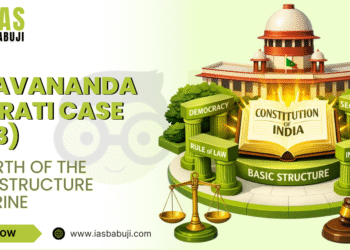
Read moreDetailsKesavananda Bharati Case (1973): The Birth of the Basic Structure Doctrine Introduction The Kesavananda Bharati v. State of Kerala (1973)...
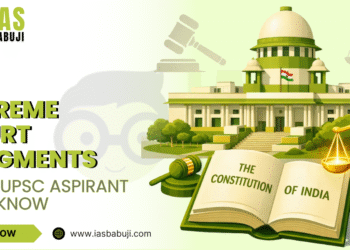
Read moreDetails10 Supreme Court Judgments Every UPSC Aspirant Must Know: UPSC Prep Essentials Introduction The Supreme Court of India is not...
Read moreDetailsSupreme Court Defines Uniform Aravalli Hills Protection: Implications for Environmental Governance The Aravalli Hills, one of India’s oldest mountain ranges,...
Read moreDetails