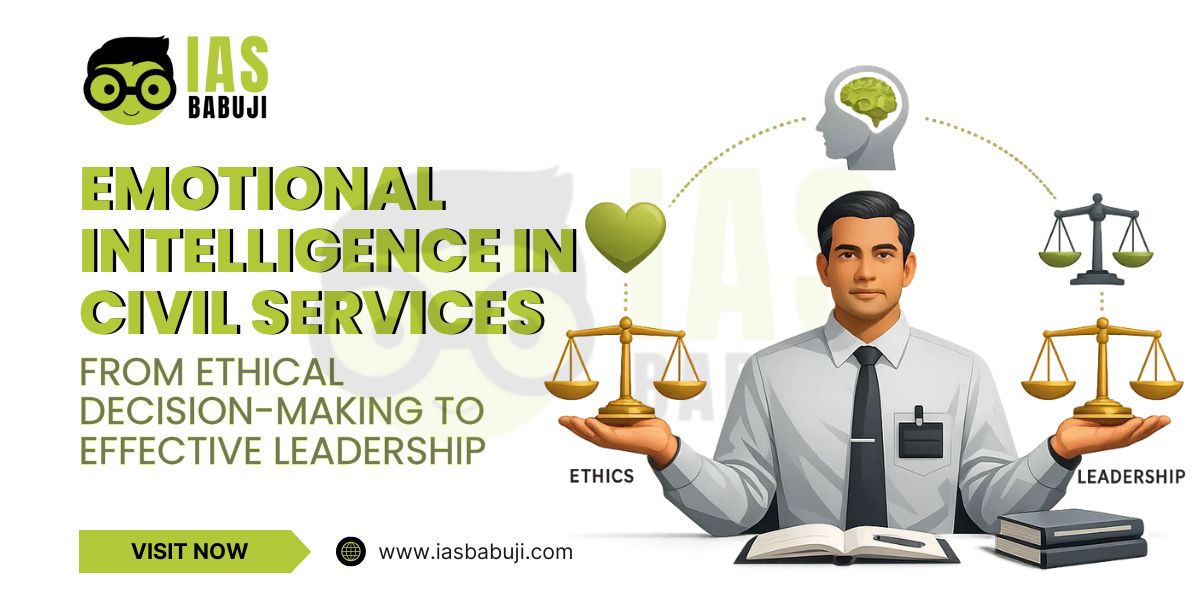
Emotional Intelligence in Civil Services: From Ethical Decision-Making to Effective Leadership
Introduction
In an increasingly complex governance environment, civil servants are expected not only to be efficient administrators but also ethical decision-makers and empathetic leaders. Technical competence and rule-based functioning alone are no longer sufficient to address citizens’ expectations, social diversity, and ethical dilemmas in public administration. In this context, Emotional Intelligence (EI) has emerged as a critical competency for civil servants. Recognised explicitly in the UPSC syllabus under GS Paper IV, emotional intelligence bridges the gap between ethical intent and effective leadership by enabling officers to understand themselves, manage emotions, and respond sensitively to others.
Understanding Emotional Intelligence
Emotional Intelligence refers to the ability to recognise, understand, manage, and use emotions effectively in oneself and in interactions with others. In public service, EI helps administrators balance empathy with objectivity, authority with compassion, and rules with discretion.
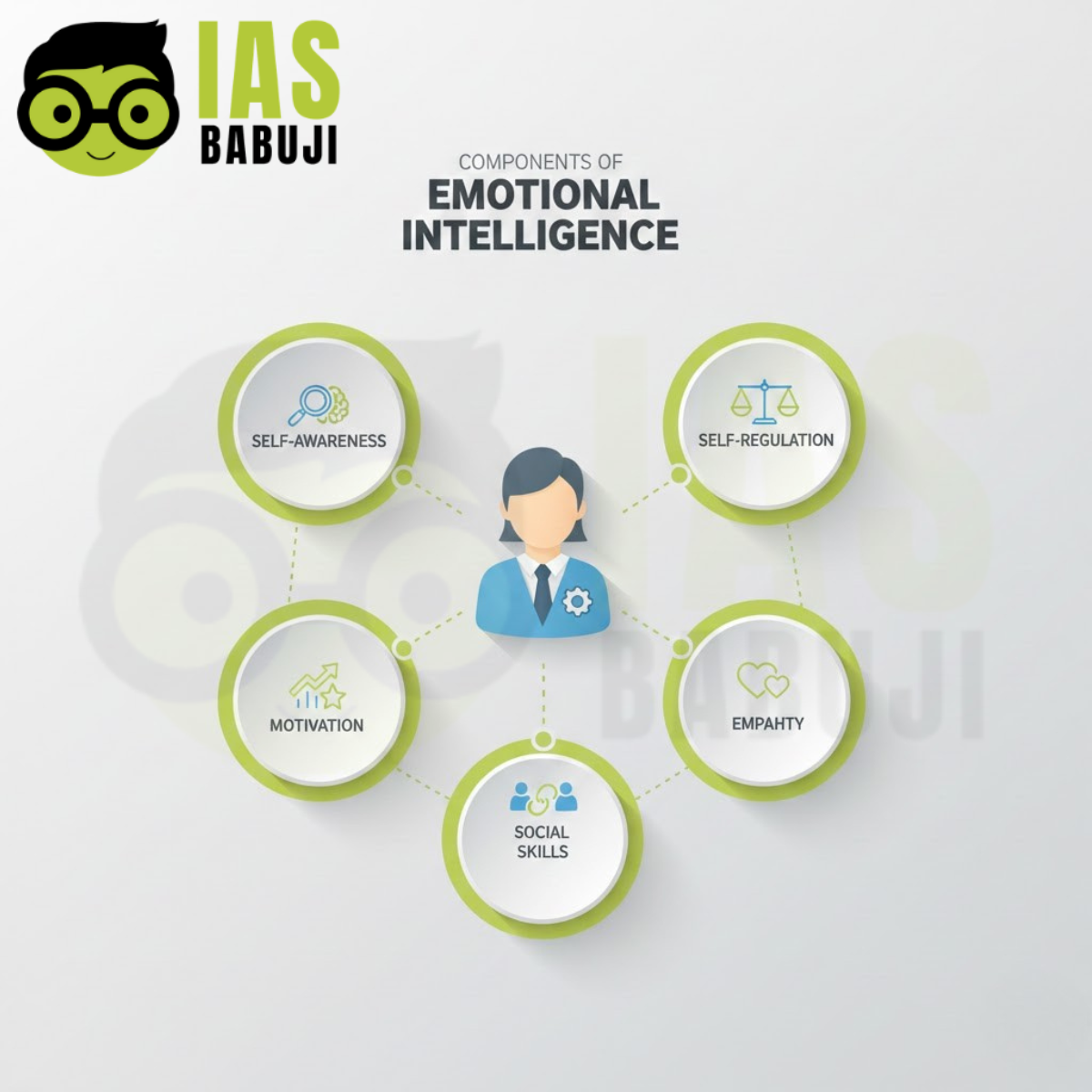
Most frameworks identify five core components of EI:
- Self-awareness
- Self-regulation
- Motivation
- Empathy
- Social skills
Together, these components shape ethical behaviour and leadership effectiveness in civil services.
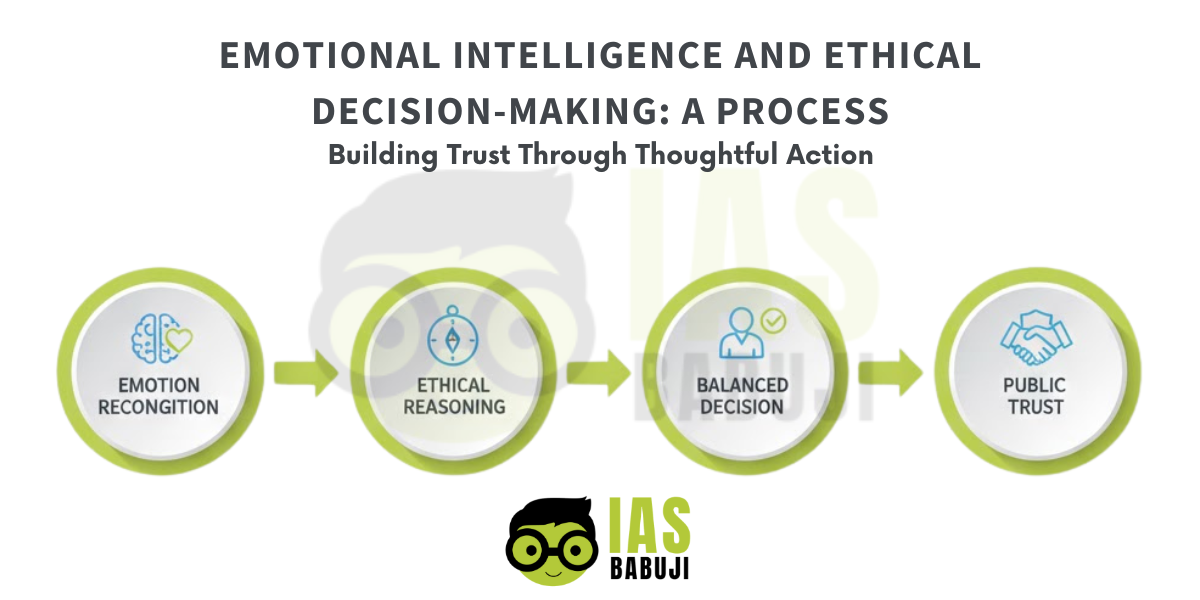
Emotional Intelligence and Ethical Decision-Making
Ethical dilemmas in administration often arise in situations where legal provisions are inadequate or competing values clash. Emotional intelligence plays a crucial role in such contexts.
Self-awareness helps civil servants recognise personal biases, prejudices, and emotional triggers that may influence decisions.
Self-regulation enables restraint under pressure, preventing impulsive or vindictive actions.
Empathy allows understanding the impact of administrative decisions on vulnerable sections.
An emotionally intelligent officer is better equipped to choose options that are legally sound, morally defensible, and socially sensitive.
Role of Emotional Intelligence in Leadership
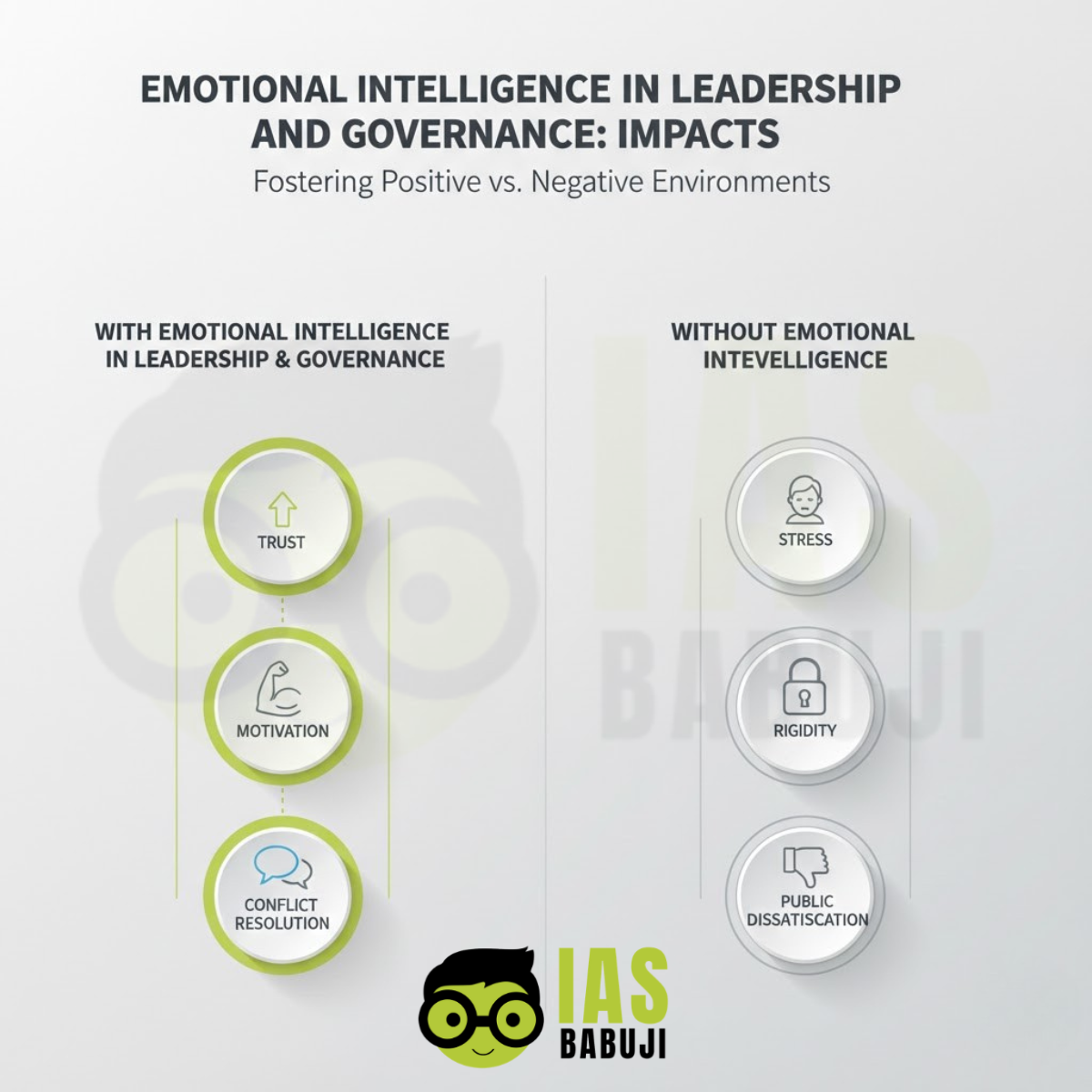
Leadership in civil services is exercised not only through authority but also through influence and trust. Emotional intelligence strengthens leadership in multiple ways.
EI enhances communication by helping leaders listen actively and respond constructively.
It improves team morale by recognising individual strengths, stress levels, and motivations.
It supports conflict resolution by enabling calm negotiation and perspective-taking.
Effective leadership rooted in EI creates organisational cultures that value integrity, accountability, and cooperation.
Emotional Intelligence in Public Service Delivery
Frontline administrators regularly interact with citizens facing distress, deprivation, or grievance. Emotional intelligence improves service delivery by humanising governance.
Empathy helps officers understand ground realities beyond files and data.
Social skills facilitate citizen engagement, grievance redressal, and participatory governance.
Self-regulation ensures professionalism even in hostile or emotionally charged situations.
As a result, emotionally intelligent administration enhances public trust and legitimacy of the State.
Emotional Intelligence in UPSC Ethics Case Studies
In GS Paper IV case studies, emotional intelligence acts as a high-value ethical dimension. UPSC rewards answers that reflect emotional maturity and balanced judgment.
- Candidates can demonstrate EI by:
- Acknowledging stakeholders’ emotions
- Balancing compassion with rules and accountability
- Choosing humane yet practical solutions
Such answers show ethical competence rather than mechanical application of rules.
Challenges in Applying Emotional Intelligence
Despite its importance, institutional and structural barriers limit the application of EI in civil services.
- High workload and administrative pressure reduce reflective decision-making.
- Rigid hierarchies discourage emotional expression.
- Performance metrics often prioritise output over human outcomes.
These challenges necessitate systemic reforms rather than reliance on individual virtue alone.
Way Forward: Institutionalising Emotional Intelligence
To embed EI in civil services, a multi-pronged approach is required.
- Incorporating EI modules in training academies and mid-career programs
- Linking leadership evaluation with behavioural competencies
- Encouraging mentoring, peer learning, and ethical reflection
- Using technology to reduce routine burdens and allow human-centric governance
Such measures can transform EI from a personal trait into an institutional strength.
Conclusion
Emotional intelligence is no longer a soft or optional skill in civil services; it is a core ethical and leadership competency. By enhancing self-awareness, empathy, and emotional regulation, EI enables civil servants to take ethical decisions under pressure and lead with credibility and compassion. In a democratic polity where governance directly affects human lives, emotionally intelligent leadership strengthens both administrative effectiveness and moral legitimacy. For UPSC aspirants, mastering emotional intelligence is essential not only to clear the examination but also to serve as responsible and humane public servants.
FAQs
What is emotional intelligence in civil services?
It is the ability of civil servants to understand and manage their emotions and respond effectively to others while performing administrative and ethical duties.
Why is emotional intelligence important for ethical decision-making?
EI helps administrators recognise biases, manage pressure, and consider human consequences while making morally sound decisions.
How does emotional intelligence improve leadership?
It strengthens communication, trust, conflict resolution, and team motivation, making leadership more effective and credible.
Is emotional intelligence part of the UPSC syllabus?
Yes. It is explicitly mentioned in GS Paper IV (Ethics, Integrity and Aptitude).
How can emotional intelligence be used in UPSC case studies?
By demonstrating empathy, balanced judgment, stakeholder sensitivity, and practical ethical solutions.