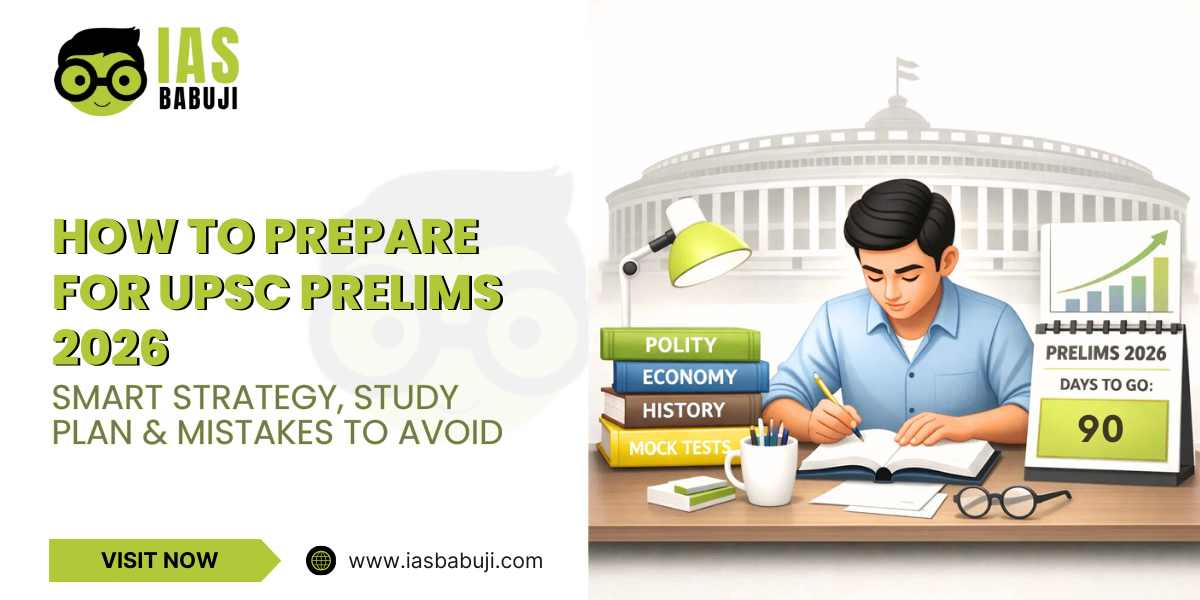
How to Prepare for UPSC Prelims 2026: Smart Strategy, Study Plan & Mistakes to Avoid
The UPSC Civil Services Prelims 2026 is approaching fast, and the next few months will be decisive for aspirants. Prelims is not just about knowledge — it is a test of smart preparation, revision discipline, accuracy, time management, and mental endurance.
With intense competition and rising cut-offs, aspirants must shift from random studying to a structured, strategy-driven preparation plan. This article provides a complete roadmap for UPSC Prelims 2026, covering subject-wise strategy, current affairs planning, mock test usage, revision techniques, and common mistakes to avoid.
Understanding UPSC Prelims: Nature of the Exam
UPSC Prelims consists of:
- General Studies Paper 1 — Merit-deciding
- CSAT Paper — Qualifying (minimum 33%)
Prelims focus on:
- Conceptual clarity
- Factual accuracy
- Elimination skills
- Application of knowledge
- Risk management in MCQs
Aspirants must focus on high-yield topics, avoid over-reading, and practice smart MCQ solving techniques.
Smart Preparation Strategy for the Last 4 Months
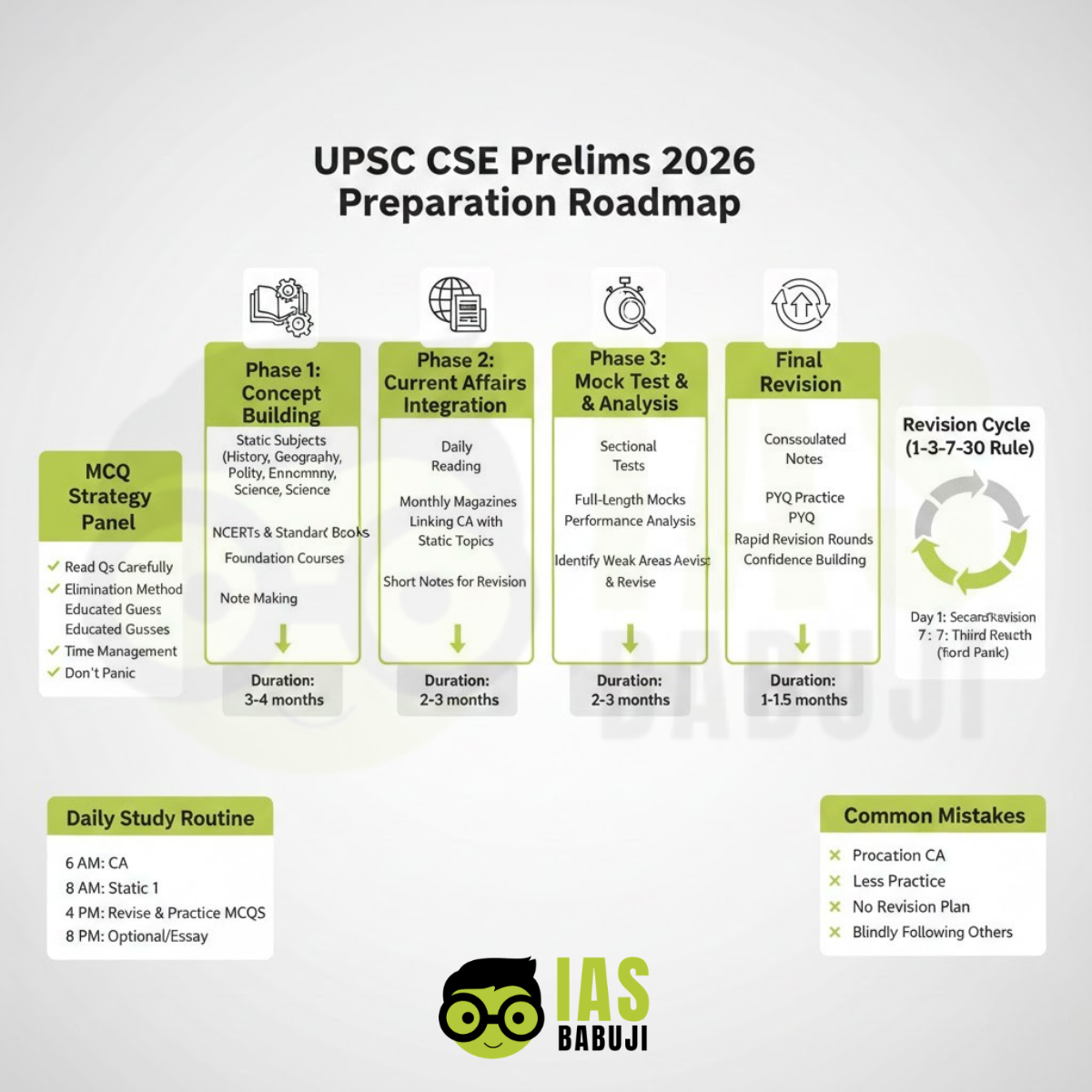
Phase 1: Concept Strengthening (Month 1)
Goal: Build strong foundations in core subjects.
Priority subjects:
- Polity
- Economy
- History
- Geography
- Environment
- Science & Tech
Strategy:
- Read standard textbooks only once or twice
- Focus on understanding concepts rather than memorizing blindly
- Make short revision notes
- Start solving topic-wise MCQs alongside reading
Phase 2: Current Affairs + Static Integration (Month 2)
Goal: Connect current events with static concepts.
Focus areas:
- Government schemes
- International relations
- Environment & biodiversity
- Science & technology
- Economy & budget-related topics
Strategy:
- Revise the last 12–18 months of current affairs
- Link news with static syllabus topics
- Avoid daily news overload — focus on compiled monthly content
Phase 3: Intensive Mock Tests & Revision (Month 3)
Goal: Improve speed, accuracy, and exam temperament.
Strategy:
- Attempt 2–3 full-length mocks per week
- Analyze mistakes deeply
- Categorize errors into:
- Conceptual mistakes
- Guessing errors
- Silly mistakes
- Revise weak areas weekly
Phase 4: Final Revision & Polishing (Month 4)
Goal: Strengthen memory retention and eliminate weak points.
Strategy:
- Focus on revision only — no new books
- Re-read short notes multiple times
- Practice high-quality MCQs daily
- Improve elimination and intelligent guessing skills
Subject-Wise Preparation Strategy
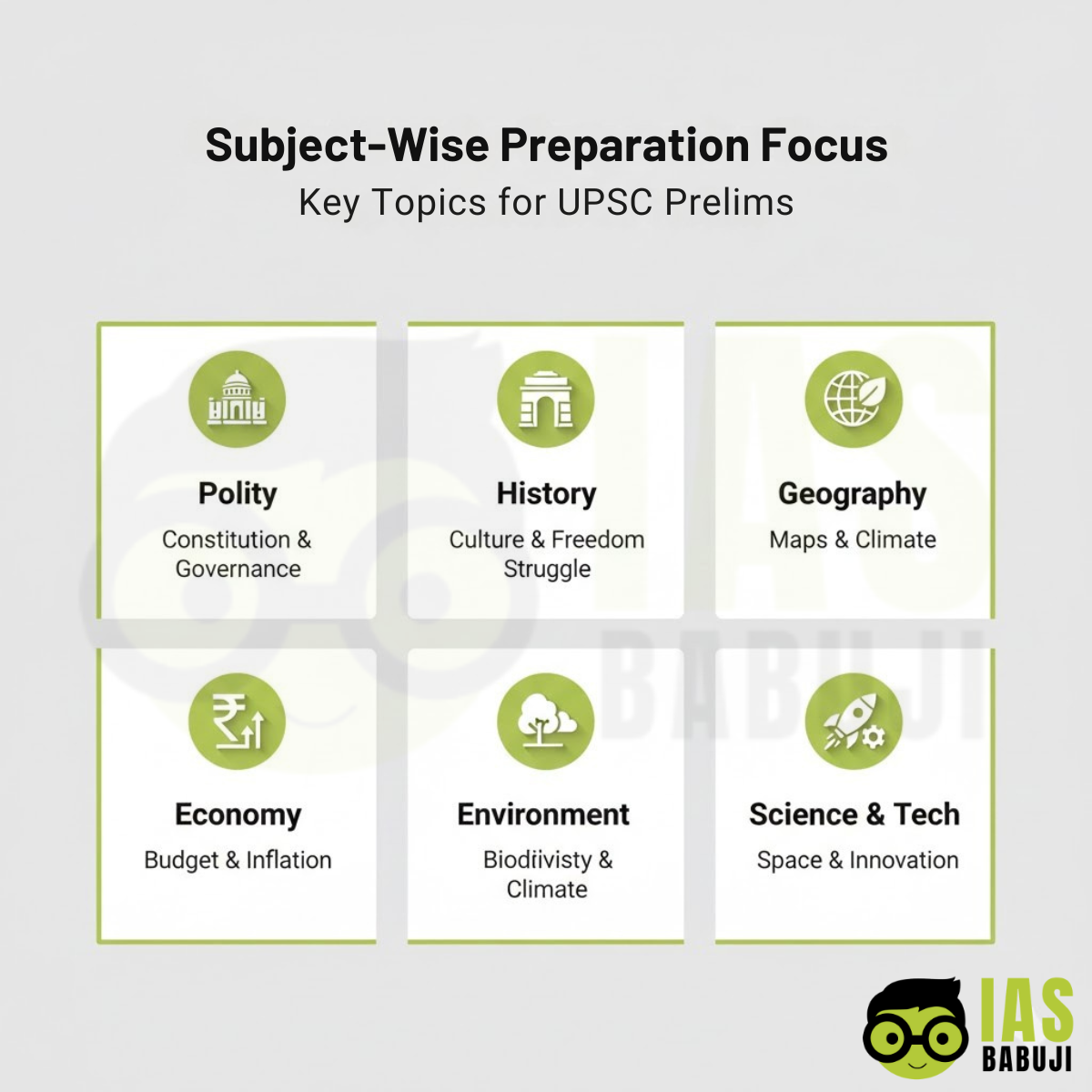
Polity
- Focus on the Constitution articles, rights, bodies, and amendments
- Practice assertion-reason and conceptual MCQs
History
- Ancient, Medieval, and Modern balance
- Culture, freedom struggle, personalities
Geography
- Maps, climate, and physical features
- Practice diagram-based learning
Economy
- Inflation, GDP, budget, banking
- Current affairs linkage essential
Environment
- Biodiversity, climate change, wildlife
- International conventions
Science & Tech
- Space, biotech, AI, defense technology
- Application-based questions
Static vs Current Affairs: Right Balance
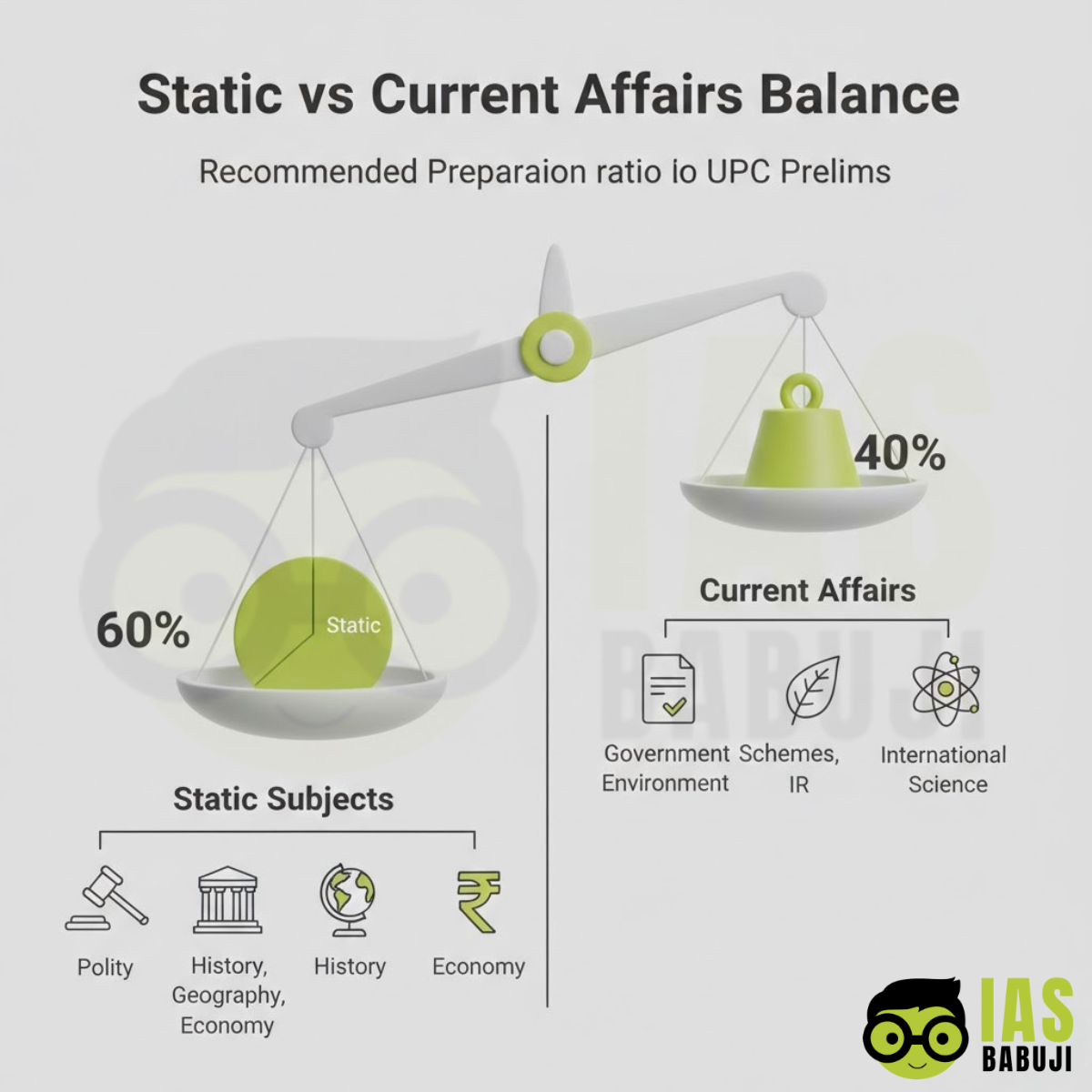
Recommended ratio:
- 60% Static
- 40% Current Affairs
Tips:
- Do not read too many sources
- Focus on relevance to the syllabus
- Convert current affairs into short revision bullets
How to Use Mock Tests Effectively
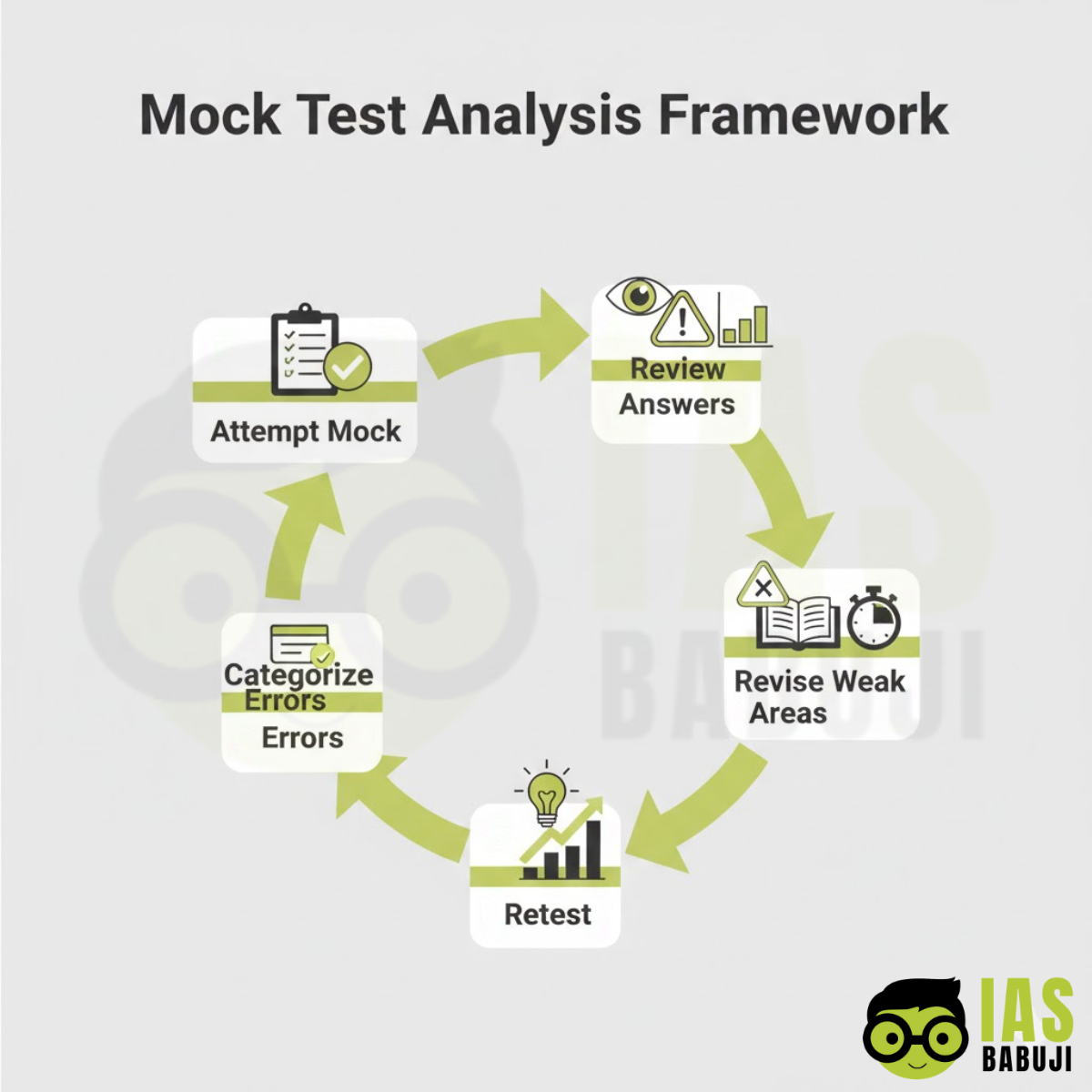
Mocks are valuable only if analyzed properly.
Correct Mock Strategy
- Attempt mocks in real exam conditions
- Analyze each wrong question
- Maintain an error notebook
- Track improvement in accuracy, not just marks
Mock Analysis Framework
Attempt → Review → Categorize Errors → Revise → Retest
Smart MCQ Attempt Strategy
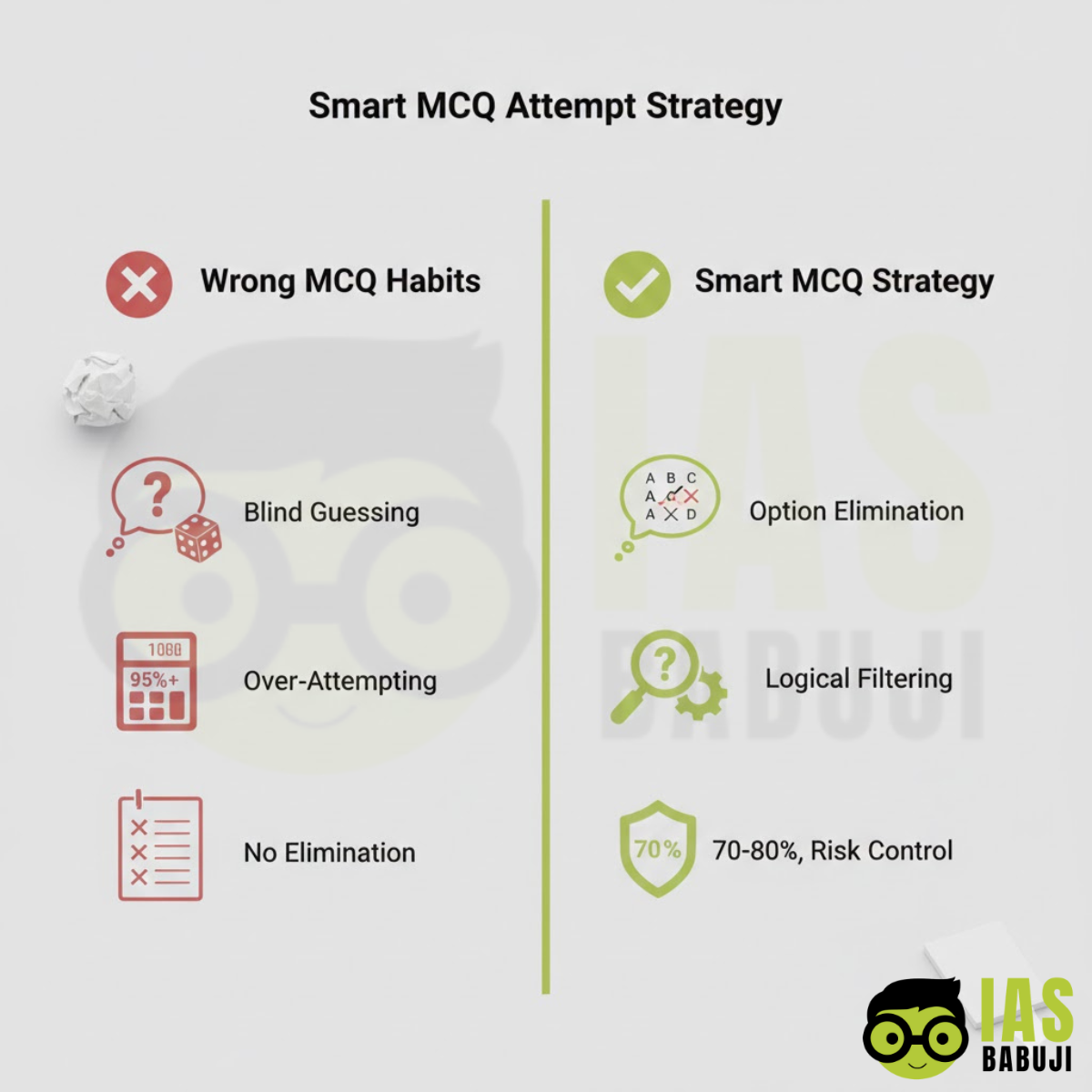
Elimination Techniques
- Remove extreme or illogical options
- Look for factual traps
- Identify UPSC’s common option patterns
Guessing Strategy
- Avoid blind guesses
- Attempt questions with at least 2 eliminated options
- Focus on accuracy over the number of attempts
Revision Framework That Works
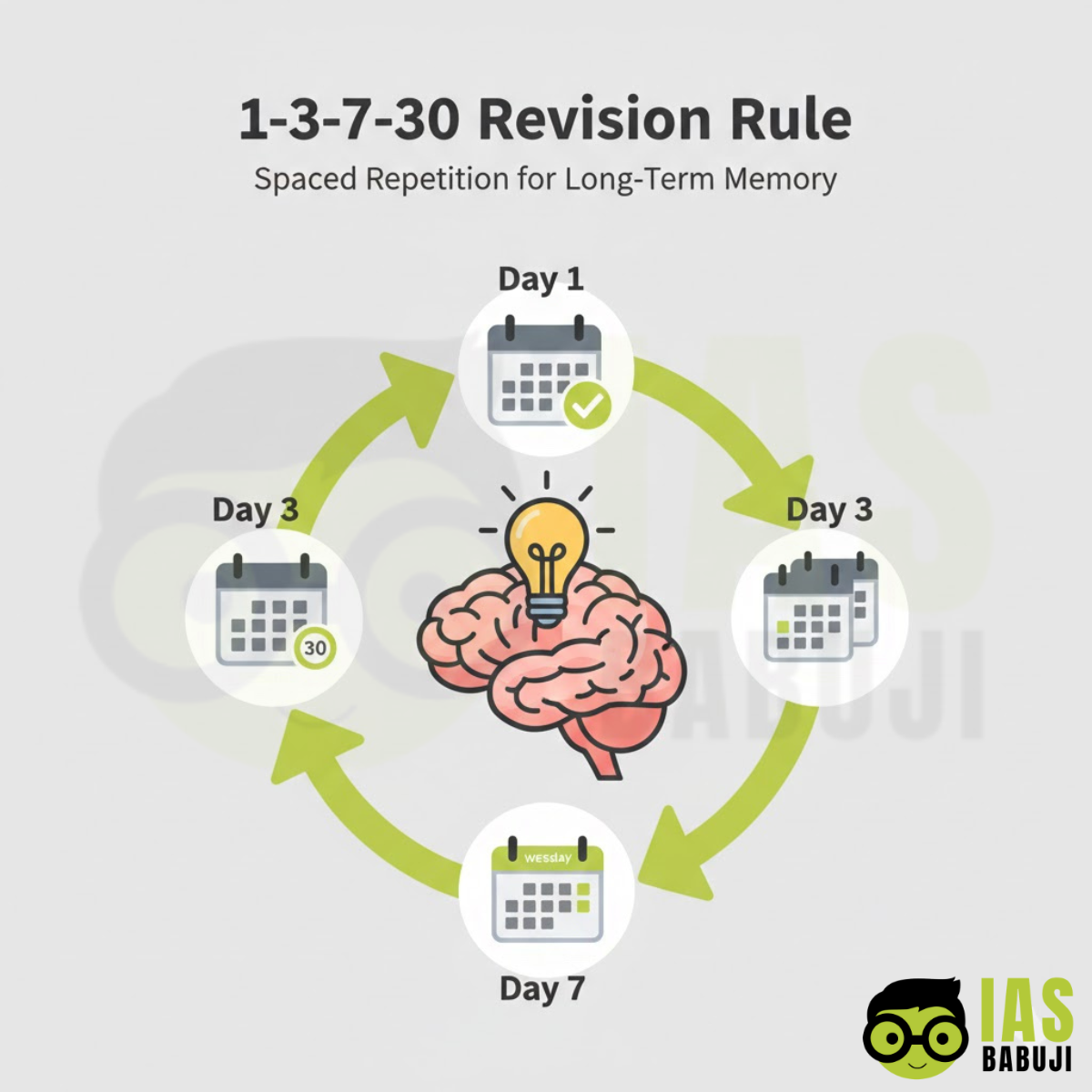
The 1–3–7–30 Rule
- Revise after 1 day
- Then, after 3 days
- Then, after 7 days
- Then, after 30 days
Active Revision Methods
- Flashcards
- Self-quizzing
- Explaining concepts aloud
- Mind maps
Common Mistakes Aspirants Must Avoid
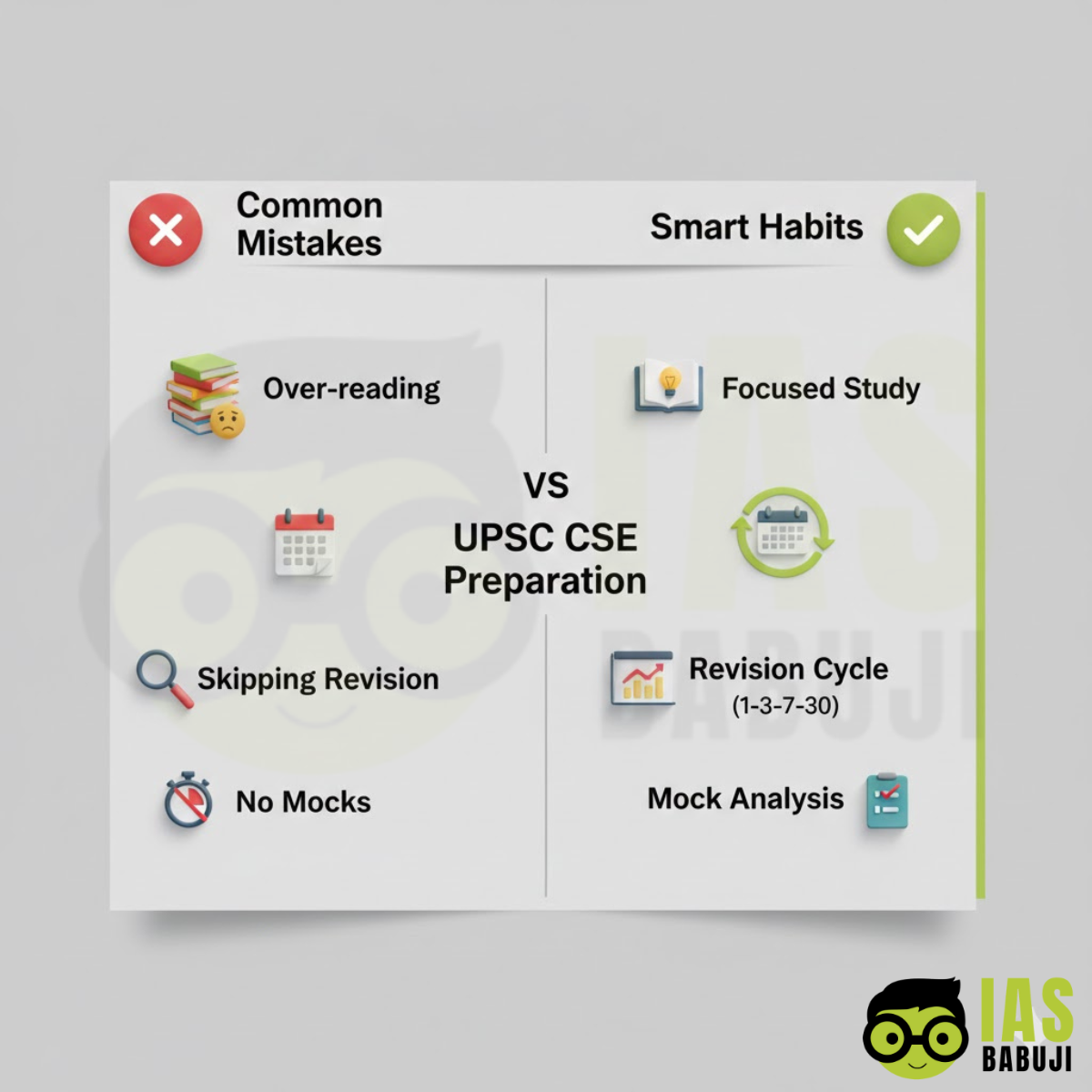
- Reading too many books
- Ignoring CSAT practice
- Over-attempting questions
- Studying without revision
- Skipping mock test analysis
- Changing strategy frequently
- Last-minute panic and burnout
Ideal Daily Study Routine
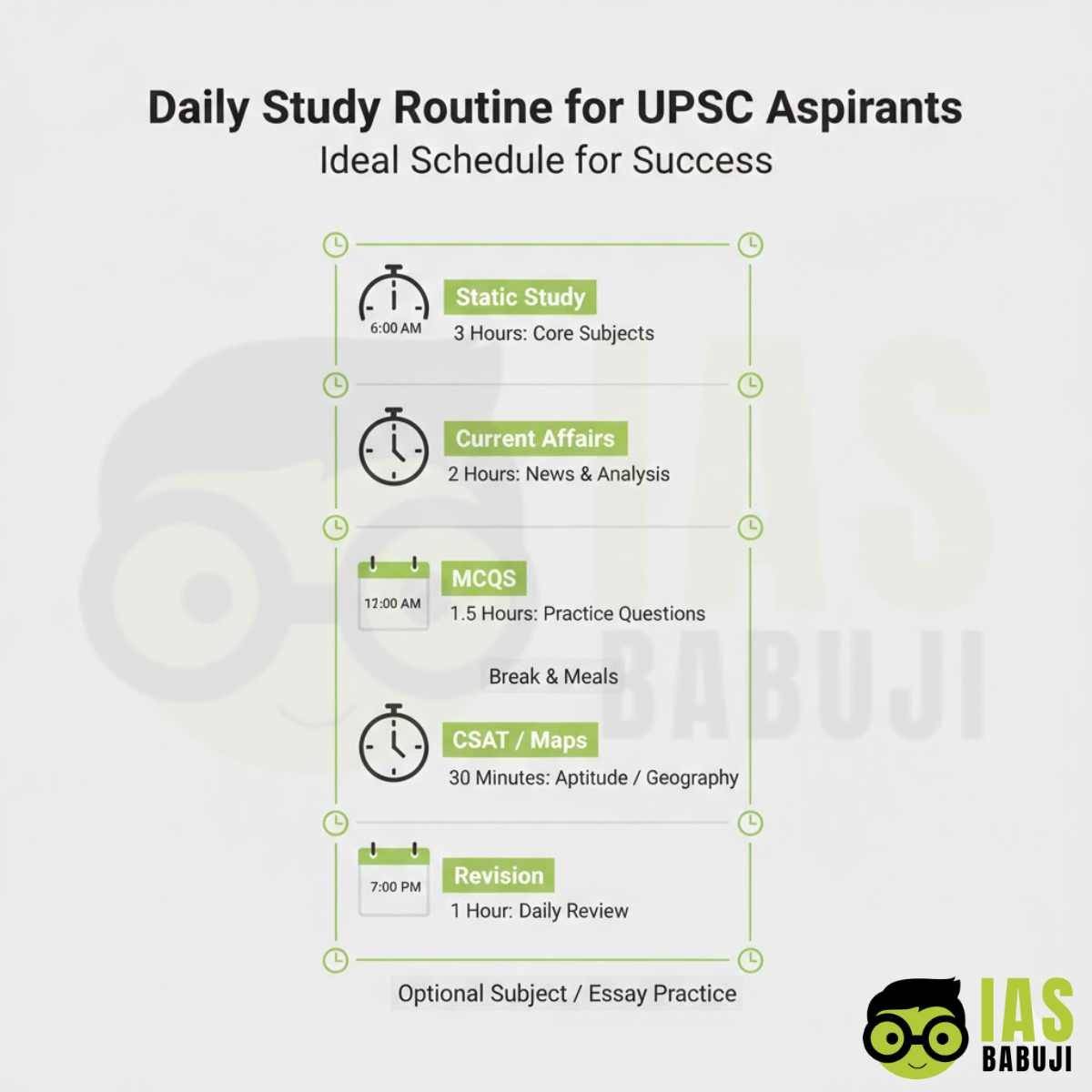
- 3 hours — Static subject study
- 2 hours — Current affairs
- 1.5 hours — MCQ practice
- 1 hour — Revision
- 30 minutes — CSAT or maps
Consistency matters more than long hours.
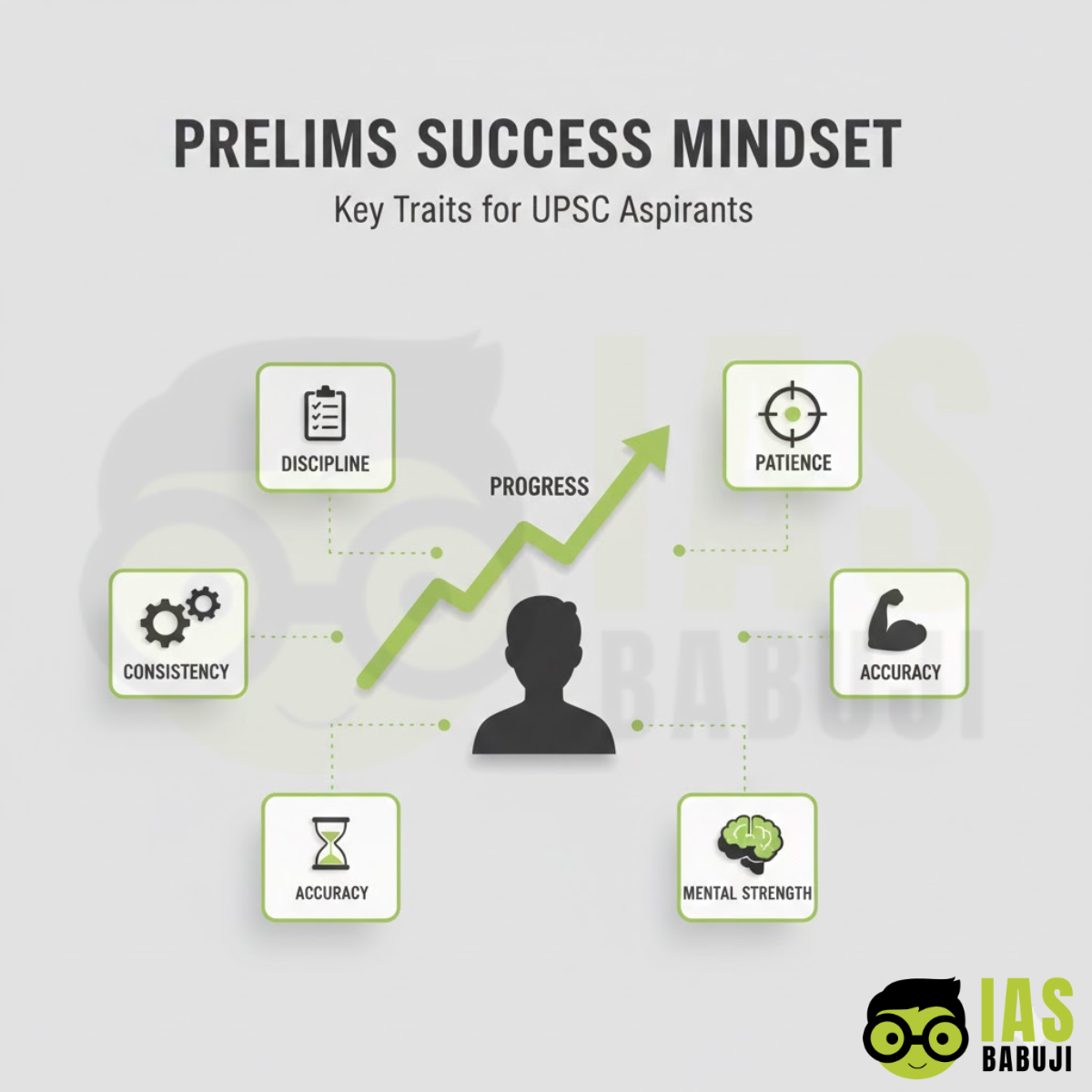
Mindset for Prelims Success
- Stay disciplined, not emotional
- Avoid comparison with others
- Focus on progress, not perfection
- Maintain physical health and sleep
- Trust your preparation
Prelims is a marathon, not a sprint.
Frequently Asked Questions (FAQs)
How many months are enough for Prelims preparation?
A focused 4–6 months of smart preparation is sufficient.
How many mock tests should I attempt?
Around 25–40 high-quality full-length mocks.
What is a safe number of attempts in Prelims?
Usually 75–90 attempts with good accuracy.
Is current affairs enough to clear Prelims?
No. A static foundation is essential.
Should I read multiple sources?
No. Limited, repeated sources are more effective.
Conclusion
UPSC Prelims 2026 requires strategy, discipline, smart revision, and controlled risk-taking. Aspirants who follow a structured plan, avoid distractions, revise consistently, and practice mock tests with proper analysis have the highest chances of clearing the exam.
Success in Prelims is not about studying more — it is about studying smartly, consistently, and purposefully.