
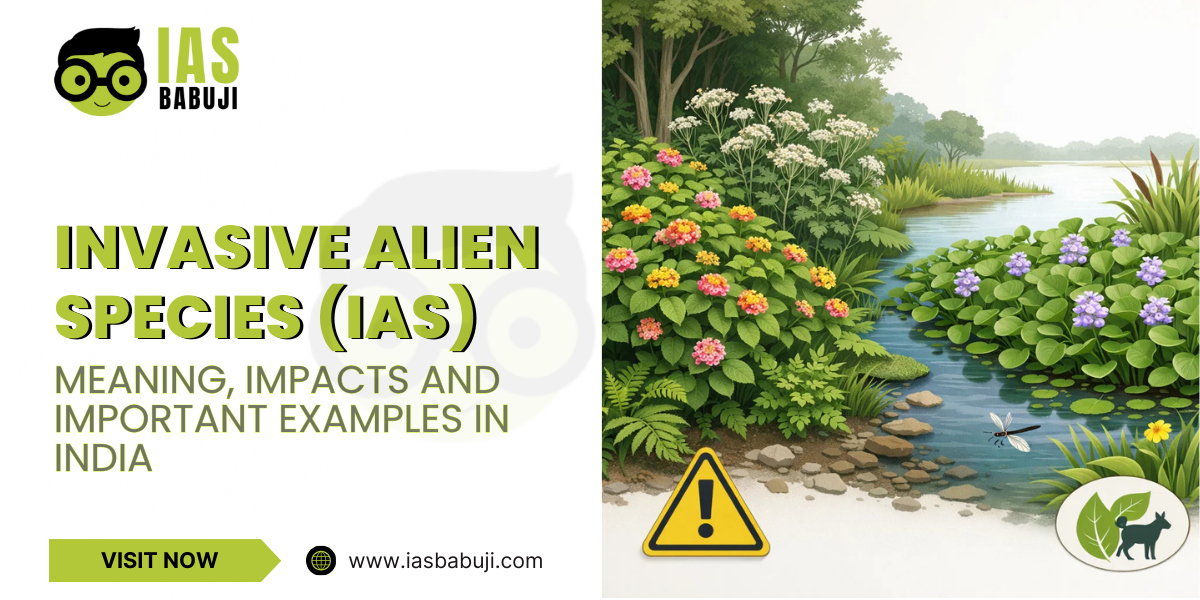
Invasive Alien Species (IAS): Meaning, Impacts and Important Examples in India (UPSC GS 3)
Biodiversity is one of India’s greatest natural strengths. However, one of the most underestimated threats to biodiversity today is the spread of Invasive Alien Species (IAS).
Invasive species are not always dramatic like tigers or snakes. Many invasive species are small plants, insects, aquatic weeds, or microorganisms—but they can cause massive damage to:
- ecosystems
- agriculture
- forests
- fisheries
- water bodies
- public health
- livelihoods
For UPSC, invasive alien species are important for Prelims + Mains, especially under:
- Environment and Ecology (GS 3)
- Biodiversity and conservation
- Climate change and human impact
1. What are Invasive Alien Species?
Alien Species (Meaning)
An alien species is a species that is introduced outside its natural geographical range.
This introduction can happen due to:
- trade and transport
- tourism
- agriculture
- shipping and ballast water
- ornamental plant trade
- accidental introduction
Invasive Alien Species (Definition)
An invasive alien species is an alien species which:
✅ establishes itself in the new area
✅ spreads rapidly
✅ causes ecological, economic, or health damage
2. Why Invasive Species Become a Problem?
Invasive species become harmful because:
1) Lack of Natural Predators
In a new ecosystem, invasive species often have:
- no predators
- no parasites
- no natural competitors
So they spread fast.
2) High Reproduction Rate
Many invasive species:
- reproduce quickly
- grow aggressively
- dominate local habitats
3) Ecosystem Disruption
They change:
- soil composition
- water availability
- food chains
- pollination systems
4) Competition with Native Species
They push out native species by:
- consuming resources
- occupying habitats
- reducing biodiversity
3. Why are Invasive Species Increasing in India?
India is increasingly vulnerable due to:
- growing global trade
- transport networks
- climate change
- deforestation and habitat disturbance
- tourism and the movement of goods
- aquarium and ornamental plant trade
4. Impacts of Invasive Alien Species (UPSC GS3)
A) Ecological Impacts
- loss of native biodiversity
- habitat destruction
- decline of endemic species
- reduced ecosystem resilience
B) Economic Impacts
- crop damage
- forestry loss
- fisheries decline
- Higher control costs
C) Human Health Impacts
Some invasive species:
- cause allergies
- spread diseases
- increase mosquito breeding
- produce toxic effects
D) Social and Livelihood Impacts
Invasive species affect:
- farmers
- forest communities
- fishermen
- grazing lands
5. Important Invasive Alien Species in India (With Examples)
Below are the most important UPSC-relevant invasive species in India, with their impacts.
A) Major Invasive Plants in India
1) Lantana camara (Lantana)
Why important?
One of the most widespread invasive weeds in India.
Impacts:
- invades forest undergrowth
- prevents regeneration of native trees
- reduces grazing land
- increases forest fire risk due to dry biomass
Found in:
- Western Ghats
- Central India forests
- Himalayan foothills
- protected areas across India
2) Parthenium hysterophorus (Congress Grass / Gajar Ghaas)
Impacts:
- causes severe allergies and skin diseases
- reduces crop yields
- harms cattle if consumed
- spreads rapidly in wastelands and roadsides
UPSC angle:
Often asked in Prelims due to its health impact.
3) Prosopis juliflora (Vilayati Babool)
Background:
Introduced for:
- afforestation
- fuelwood
- controlling desertification
Impacts:
- replaces native grasslands
- reduces biodiversity in arid ecosystems
- affects grazing lands in Rajasthan and Gujarat
- alters soil chemistry
4) Eichhornia crassipes (Water Hyacinth)
Type:
Aquatic invasive plant.
Impacts:
- blocks sunlight in water bodies
- reduces oxygen → fish deaths
- clogs rivers, lakes, canals
- increases mosquito breeding
- affects irrigation and navigation
Common in:
-
lakes, ponds, wetlands across India
5) Chromolaena odorata (Siam Weed)
Impacts:
-
invades forest edges
-
suppresses native vegetation
-
increases fire vulnerability
6) Ipomoea (Morning Glory Species)
Impacts:
- spreads over trees and shrubs
- chokes native plants
- reduces forest regeneration
B) Major Invasive Insects and Pests in India
1) Fall Armyworm (Spodoptera frugiperda)
Major crop affected:
- maize (most impacted)
Also affects: - sorghum
- sugarcane
- millet
Impacts:
- heavy crop loss
- requires high pesticide use
2) Pink Bollworm (Pectinophora gossypiella)
Crop affected:
-
cotton
Impacts:
- serious pest for cotton farmers
- affects yields and increases cost
3) South American Tomato Leaf Miner (Tuta absoluta)
Crop affected:
-
tomato
Impacts:
- destroys leaves and fruits
- severe losses for vegetable farmers
C) Major Invasive Fish and Aquatic Species in India
1) African Catfish (Clarias gariepinus)
Impacts:
- aggressive predator
- eats native fish and amphibians
- threatens local aquatic biodiversity
UPSC relevance:
Frequently discussed due to bans and biodiversity threats.
2) Tilapia (Oreochromis species)
Impacts:
- competes with native fish
- spreads quickly
- alters freshwater ecosystems
3) Gambusia (Mosquitofish)
Introduced to control mosquitoes.
Impacts:
- eats native fish eggs and larvae
- disturbs aquatic ecosystem balance
D) Major Invasive Mammals and Other Species in India
1) Feral Dogs
Impacts:
- attack wildlife
- spread diseases like rabies
- affect ground-nesting birds
2) Feral Pigs
Impacts:
- damage crops
- disturb forest ecosystems
- spread diseases
E) Invasive Species of Special Concern (India)
1) Giant African Snail (Achatina fulica)
Impacts:
- damages crops and gardens
- spreads fast in humid regions
- agricultural pest
2) Yellow Crazy Ant (Anoplolepis gracilipes)
Impacts:
- attacks native insects
- disrupts ecosystem food chains
- has been reported as a major invasive in island ecosystems
3) Red-eared Slider Turtle (Trachemys scripta elegans)
Source:
Aquarium pet trade.
Impacts:
- competes with native turtles
- spreads diseases
- becomes dominant in wetlands
6. Why Invasive Species are a Serious Biodiversity Threat?
Invasive species are considered one of the top global drivers of biodiversity loss, along with:
- habitat destruction
- climate change
- pollution
- overexploitation
They cause:
- extinction of native species
- ecosystem collapse in sensitive regions
- long-term irreversible ecological damage
7. India’s Policy and Institutional Response
India’s response includes:
1) Biodiversity Act and NBA
- National Biodiversity Authority (NBA)
- State Biodiversity Boards
- local Biodiversity Management Committees (BMCs)
These bodies can support control measures.
2) Forest and Wildlife Management
Forest departments attempt:
- mechanical removal
- controlled burning
- habitat restoration
3) Quarantine and Import Regulation
Plant quarantine laws regulate:
- invasive pests and diseases
- import of seeds and plants
4) Awareness and Community Participation
Many invasive species spread due to:
- lack of awareness
- accidental transport
8. How to Control Invasive Species? (UPSC Mains Way Forward)
A) Prevention is Best
- strict border quarantine
- monitoring of imported plants/animals
- regulation of pet trade
B) Early Detection and Rapid Response
- surveillance systems
- reporting mechanisms
- quick eradication before spread
C) Mechanical Control
- uprooting weeds
- cleaning water bodies
D) Biological Control
Using natural enemies carefully.
Example:
- certain insects used to control invasive weeds
(However, this must be scientifically evaluated.)
E) Ecosystem Restoration
- replanting native species
- restoring wetlands and grasslands
- reducing habitat disturbance
9. UPSC Prelims Quick Notes
- Lantana → forest invasion, fire risk
- Parthenium → allergies, crop loss
- Prosopis juliflora → grassland replacement
- Water hyacinth → oxygen loss, mosquito breeding
- Fall armyworm → maize pest
- African catfish → predator threat to native fish
- Red-eared slider → pet trade invasive turtle
Conclusion
Invasive alien species represent a silent but serious threat to India’s biodiversity and economy. While some were introduced intentionally for agriculture, forestry, or ornamental purposes, they have now become major ecological disruptors.
For India, the solution lies in:
- prevention
- strict quarantine
- scientific control methods
- public awareness
- ecosystem restoration
Invasive species management is not only an environmental issue—it is also crucial for sustainable development, agriculture, public health, and biodiversity conservation.
FAQs
Q1. What is an invasive alien species?
An invasive alien species is a non-native species that spreads rapidly and causes ecological, economic, or health harm.
Q2. Name some major invasive plants in India.
Lantana camara, Parthenium hysterophorus, Prosopis juliflora, and Water Hyacinth are major invasive plants.
Q3. Why is Parthenium dangerous?
Parthenium causes skin allergies, respiratory problems, and also reduces agricultural productivity.
Q4. Why is water hyacinth harmful?
It blocks sunlight, reduces oxygen in water, kills fish, clogs water bodies, and increases mosquito breeding.
Q5. What is the biggest reason invasive species spread?
Global trade, transport, and lack of natural predators in new habitats are major reasons.
Q6. What is the best way to control invasive species?
Prevention through quarantine and early detection is the most effective method.