

UPSC Prelims 2026 Study Plan: Daily Routine for Serious Aspirants
Focus: Time Table, Subject Rotation, Revision Cycle
Preparing for UPSC Prelims 2026 requires more than hard work — it needs structure, discipline, smart subject rotation, and a strong revision system. Aspirants who follow a consistent daily routine and systematic revision cycle perform significantly better than those who study randomly.
This article provides a complete daily study plan, a balanced subject rotation strategy, and a powerful revision cycle designed specifically for serious UPSC Prelims aspirants.
Why a Structured Daily Routine is Crucial for UPSC Prelims
UPSC Prelims demands mastery over:
- Polity
- History
- Geography
- Economy
- Environment
- Science & Tech
- Current Affairs
Without a fixed timetable and revision framework, aspirants often:
- Forget previously studied topics
- Lose track of weak areas
- Waste time on low-priority subjects
- Burnout due to inconsistent study patterns
A strong routine ensures:
- Daily progress
- Regular revision
- Balanced subject coverage
- Improved retention and accuracy
Ideal Daily Study Time for Serious Aspirants
Recommended: 6–10 hours per day
Beginner Level: 5–6 hours
Intermediate Level: 7–8 hours
Advanced Level: 8–10 hours
Consistency matters more than long but irregular study sessions.
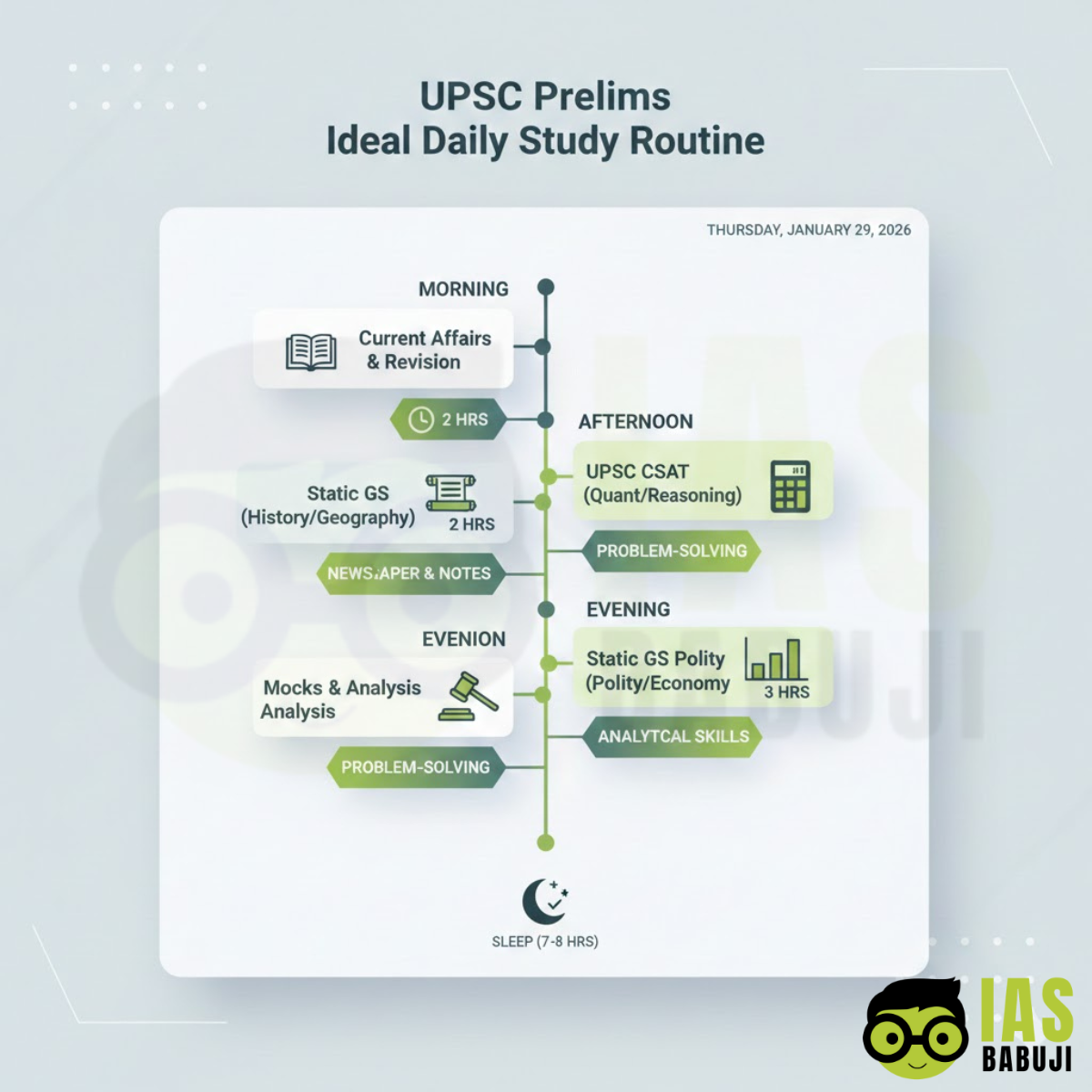
Sample Daily Time Table for UPSC Prelims 2026
Morning Session (Concept Building)
- Polity / Economy / Geography core topics
- Standard textbooks and notes
- Concept clarity focus
Midday Session (Practice & Reinforcement)
- MCQs from the studied topics
- PYQs practice
- Error analysis
Evening Session (Secondary Subject)
- History / Environment / Science & Tech
- Static + current integration
Night Session (Revision & Current Affairs)
- Daily news analysis
- Monthly current affairs revision
- Short notes review
Subject Rotation Strategy for Balanced Preparation
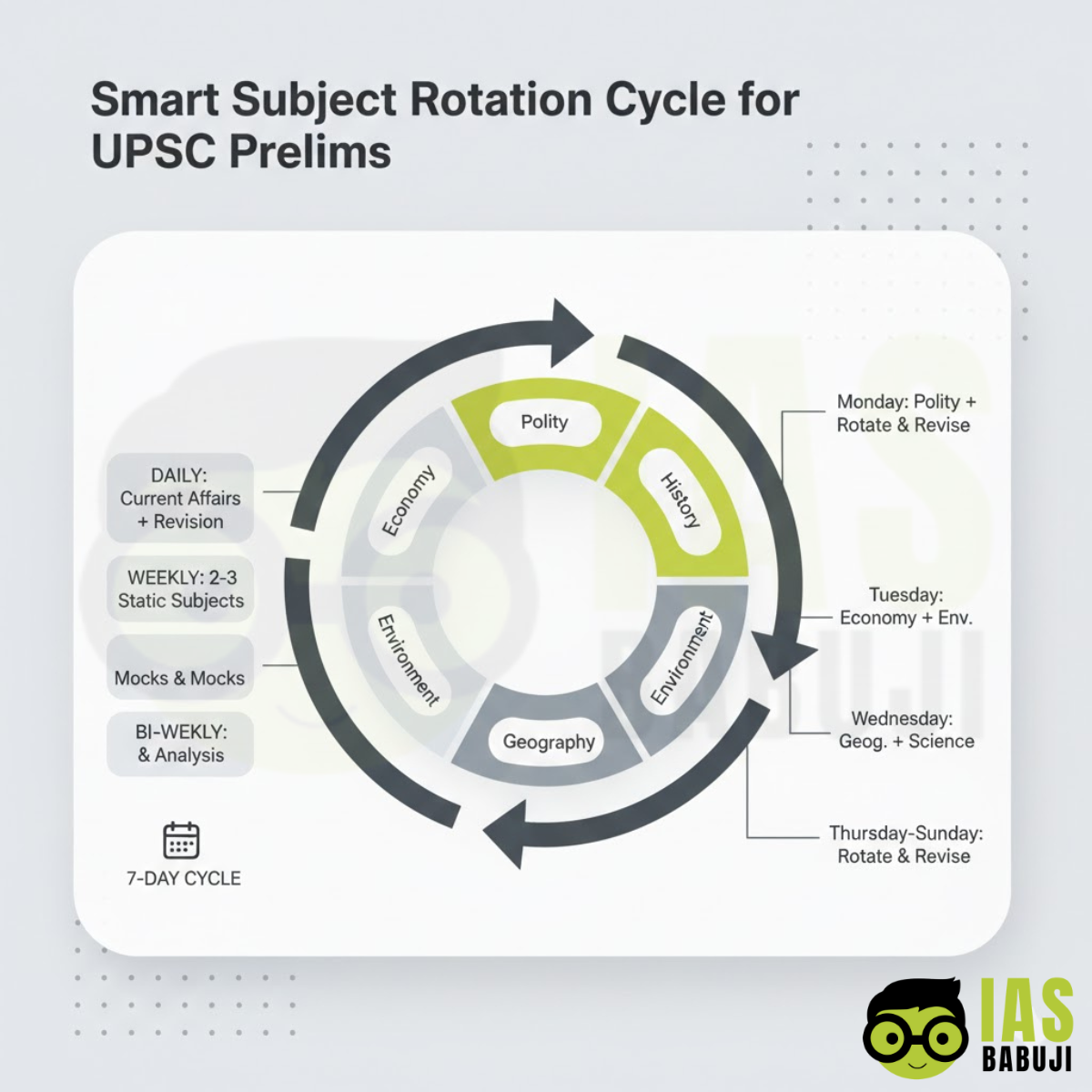
Avoid studying only one subject for long periods. Rotate subjects to maintain freshness and improve recall.
Weekly Subject Rotation Example
Day 1–2: Polity + Current Affairs
Day 3–4: Economy + Environment
Day 5: History + Culture
Day 6: Geography + Science & Tech
Day 7: Full Revision + Mock Test
This ensures:
- Equal subject coverage
- Reduced monotony
- Better memory consolidation
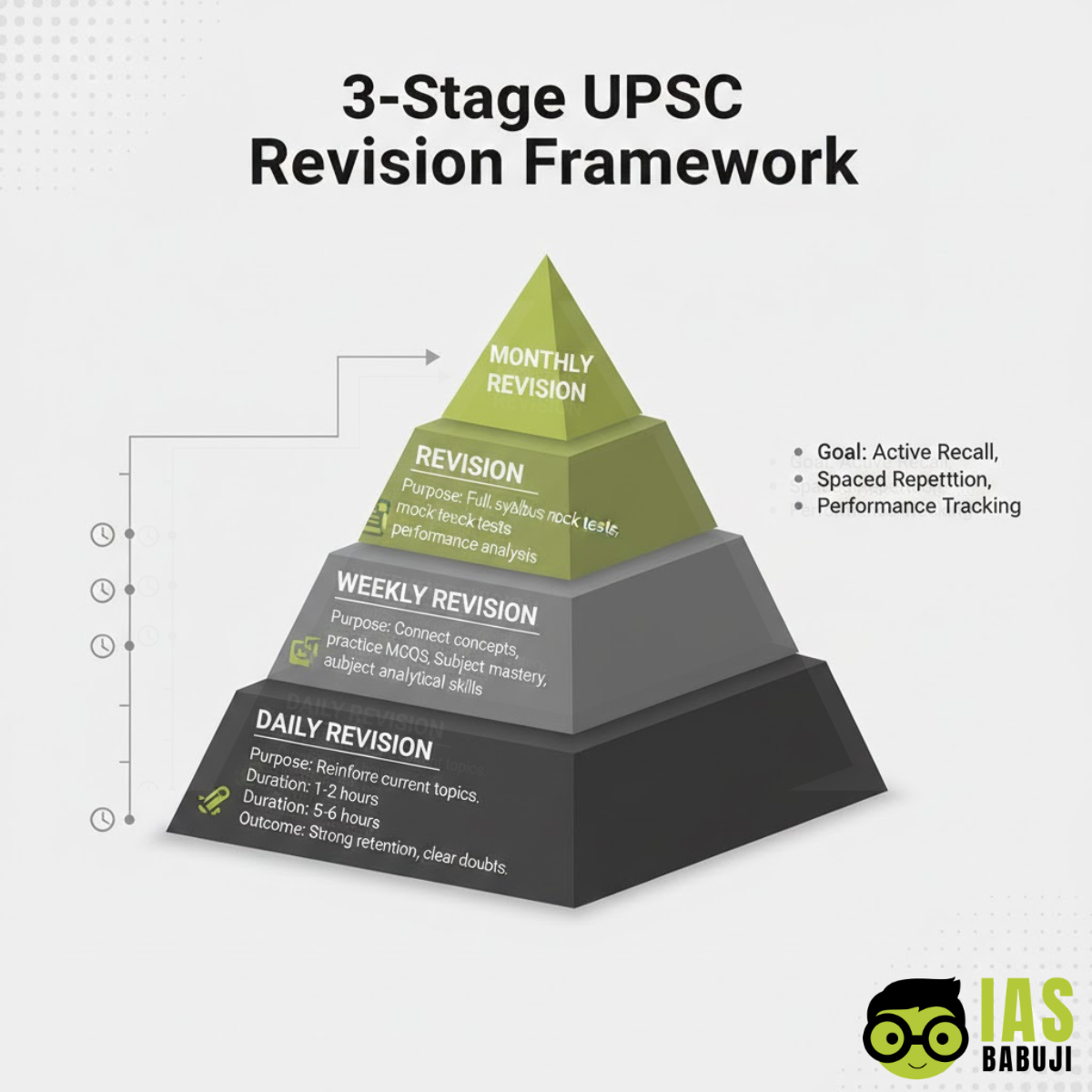
The 3-Level Revision Cycle for Maximum Retention
Revision is the real key to Prelims success.
Level 1: Daily Micro Revision
- Review notes studied that day
- Reattempt incorrect MCQs
Level 2: Weekly Revision
- Summarize the entire week
- Revisit weak subjects
- Update short notes
Level 3: Monthly Deep Revision
- Full subject revision
- Consolidate current affairs
- Attempt full-length mock tests
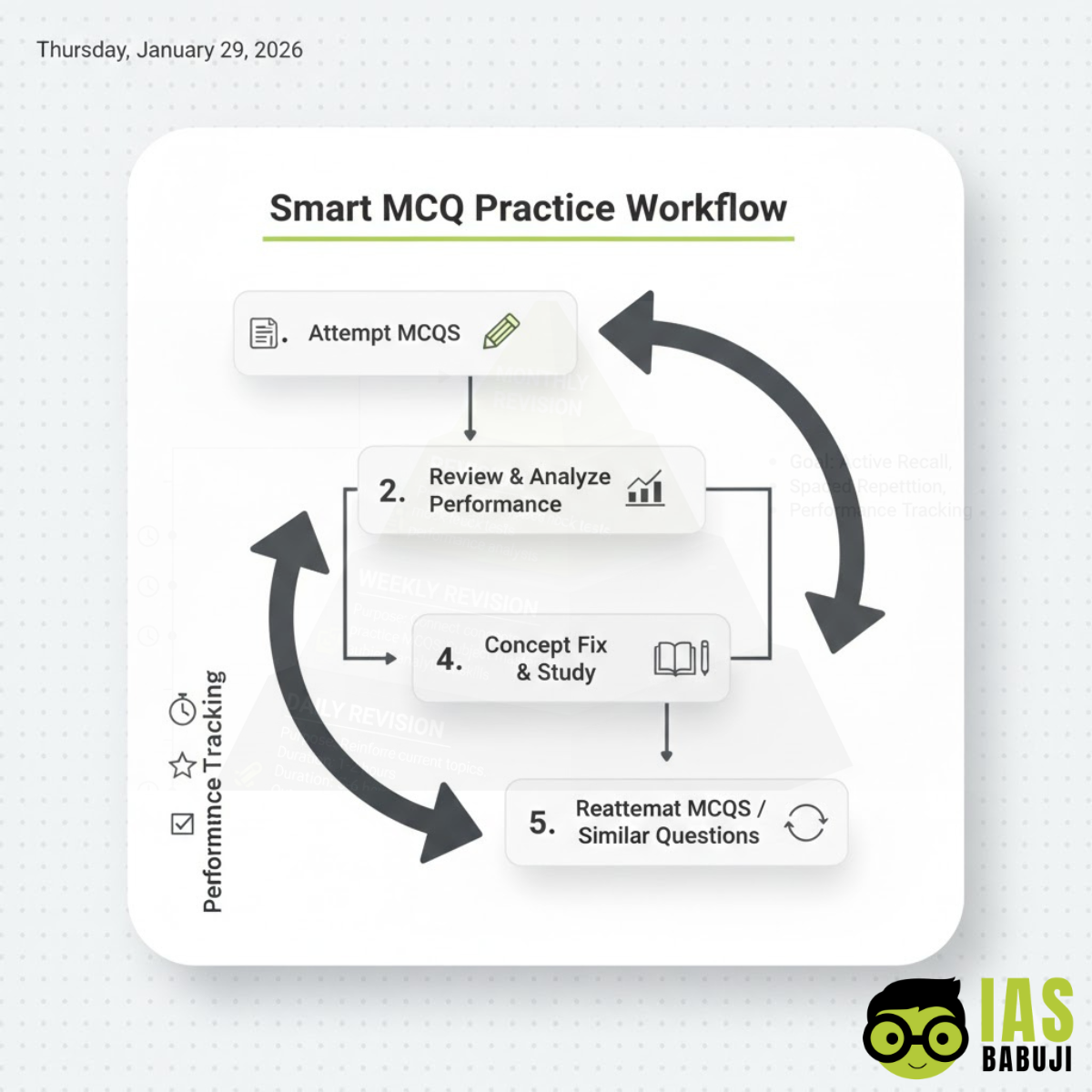
Smart MCQ Practice Strategy for Prelims
Aspirants should solve:
- 40–60 MCQs daily
- Full-length mocks weekly
- Previous Year Questions regularly
Key focus:
- Accuracy over guesswork
- Learning from wrong answers
- Tracking weak topics
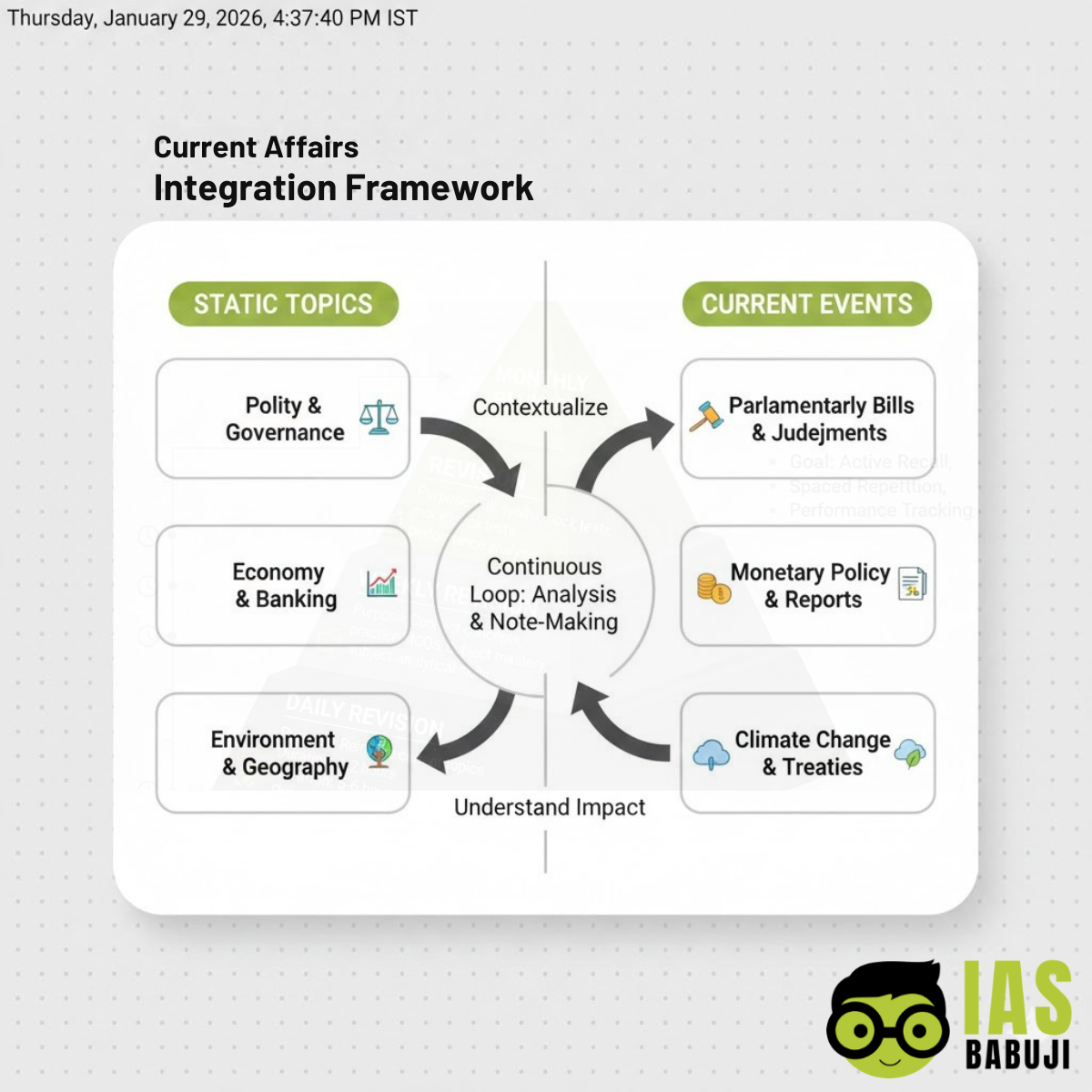
How to Integrate Current Affairs into Daily Routine
Daily tasks should include:
- News reading
- Editorial summary
- Monthly magazine revision
- Static-current topic linking
Example:
- Economy news → Link to Budget & Banking
- Environment news → Link to Climate & Biodiversity
Common Mistakes Aspirants Must Avoid
- Studying without revision
- Ignoring PYQs
- Over-studying one subject
- Attempting too many mocks without analysis
- Inconsistent daily routine
Sample Weekly Micro Plan
Weekdays
- 3 hours — Static subject
- 2 hours — Current affairs
- 1.5 hours — MCQs
- 1 hour — Revision
- 30 minutes — CSAT
Weekend
- Mock tests
- Weak area revision
- Full syllabus review
Mindset Rules for Serious Aspirants
- Discipline beats motivation
- Study daily, even on low-energy days
- Focus on consistency, not perfection
- Avoid comparison with others
- Track progress weekly
Frequently Asked Questions (FAQs)
How many hours should I study daily for Prelims 2026?
7–9 hours of focused study is ideal.
Is it necessary to study every day?
Yes. Daily study builds continuity and memory retention.
How many subjects should I study in one day?
1–2 major subjects plus current affairs and revision.
How important is revision in daily routine?
Revision is more important than reading new content.
Should I practice CSAT daily?
Yes, at least 3–4 days a week.
Can working professionals follow this plan?
Yes, by compressing hours into 4–6 high-quality study hours.
Conclusion
UPSC Prelims 2026 success depends on how consistently you follow a daily routine, how smartly you rotate subjects, and how effectively you revise.
Aspirants who treat preparation like a daily discipline, rather than a temporary effort, are the ones who clear Prelims.
A fixed timetable, regular MCQ practice, disciplined revision, and a calm mindset are the real keys to success.