Green Economy in India: Carbon Markets, Green Hydrogen and the Future of Sustainable Growth (GS 3)
A green economy is emerging as one of the most important global priorities in the 21st century. Countries are increasingly realising that economic growth based only on fossil fuels is not sustainable due to:
- climate change
- air pollution
- energy insecurity
- rising import bills
- global carbon-related trade restrictions
For India, the green economy is not only about protecting the environment—it is also a major opportunity for:
- industrial transformation
- job creation
- innovation and startups
- energy independence
- global leadership
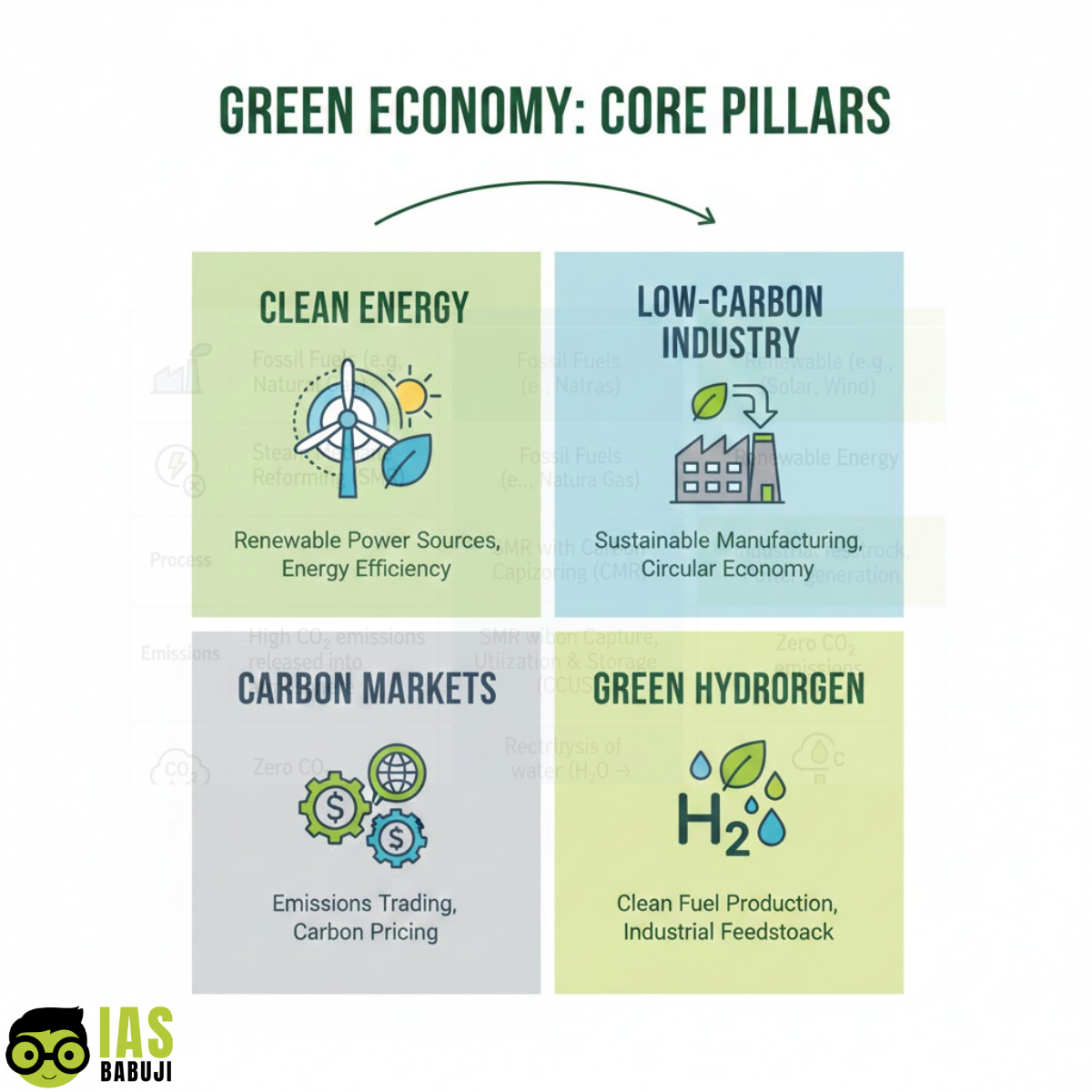
Two of the most important pillars of India’s green economy transition are:
- Carbon Markets (Carbon Credit Trading)
- Green Hydrogen
This topic is highly relevant for UPSC because it integrates:
- Environment + Economy
- Climate governance
- Renewable energy
- International commitments
- Industrial policy and exports
1. What is a Green Economy?
A green economy is an economic system that aims to:
- improve human well-being
- reduce environmental risks
- promote sustainable development
- create low-carbon growth
Key Features of Green Economy
A green economy is based on:
- low carbon emissions
- resource efficiency
- social inclusion
- clean energy
- sustainable industrial production
2. Why Green Economy Matters for India?
India faces a dual challenge:
Development Needs
- poverty reduction
- employment generation
- infrastructure expansion
- industrial growth
Environmental Constraints
- climate change impacts
- rising heat waves
- water stress
- air pollution
- extreme weather events
India must grow, but in a cleaner and more resilient way.
3. Carbon Markets: The Economic Tool for Emission Reduction
What is a Carbon Market?
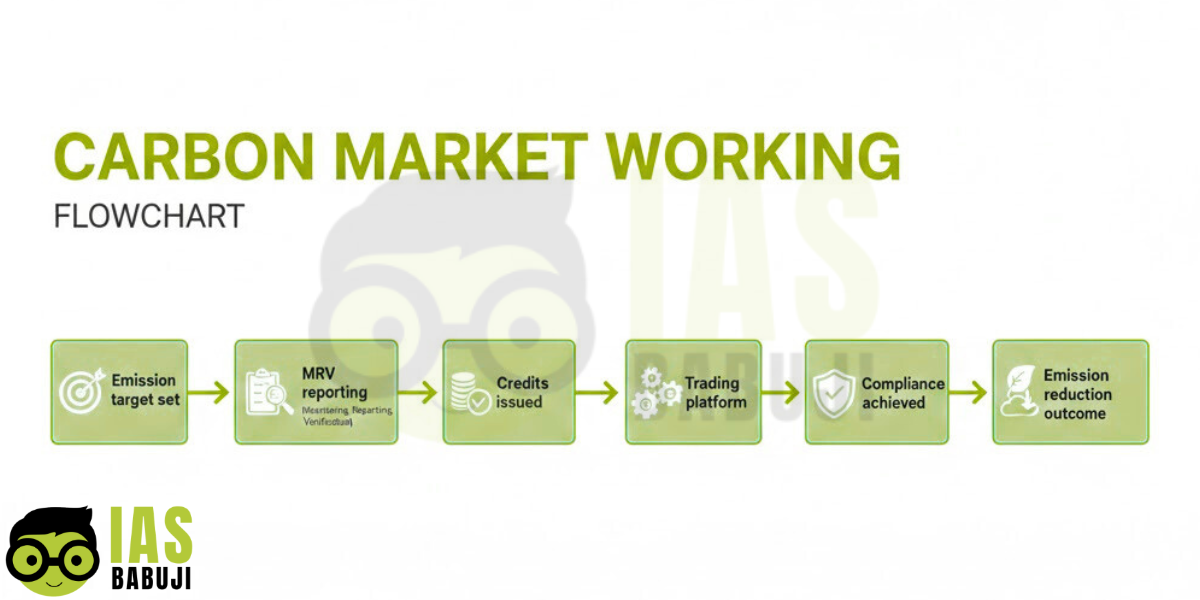
A carbon market is a system where:
- Carbon credits are generated by reducing emissions
- These credits can be bought and sold
- Industries get a financial incentive to cut emissions
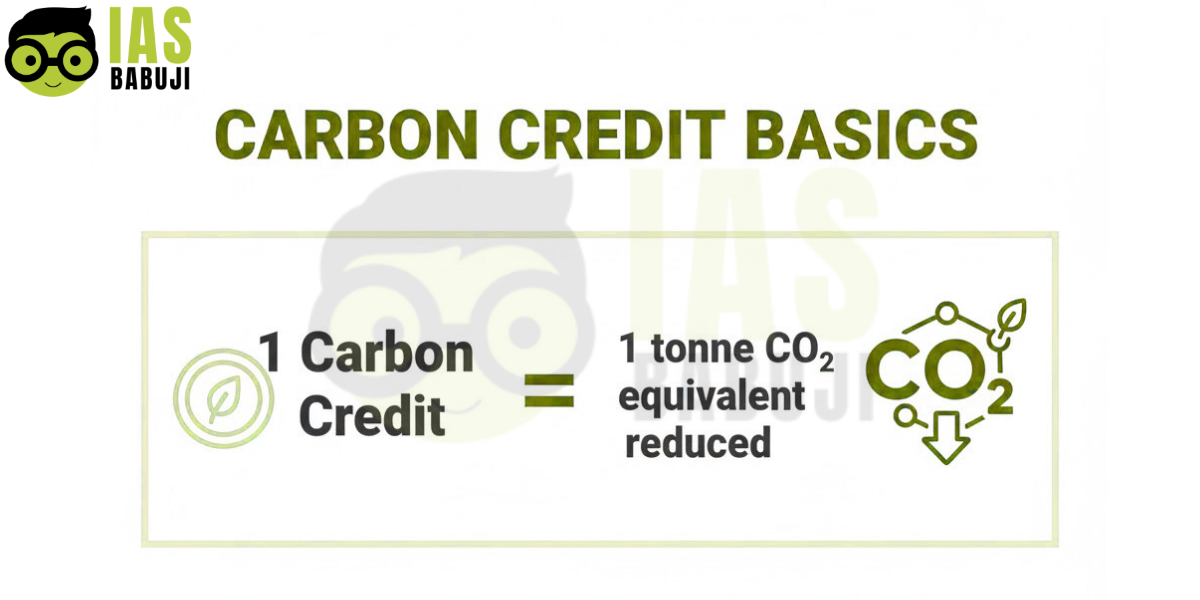
Carbon Credit (Basic Definition)
1 carbon credit = 1 tonne of CO₂ equivalent reduced/removed
4. Carbon Markets in India: Why They Matter?
India is building its own carbon market system through policy frameworks like:
- Carbon Credit Trading Scheme (CCTS)
- energy efficiency trading models
- sectoral emission reduction mechanisms
Why India Needs Carbon Markets
Carbon markets help India:
- reduce emissions cost-effectively
- attract green investment
- create new financial assets
- support net-zero planning
- improve export competitiveness
5. Types of Carbon Markets (UPSC Prelims Concept)
A) Compliance Carbon Market
- mandatory participation
- The Government sets targets/caps
- Industries trade credits for compliance
B) Voluntary Carbon Market
- optional participation
- companies buy credits for sustainability goals
India is expected to strengthen both systems gradually.
6. Benefits of Carbon Markets for Green Economy
1) Market Incentive for Emission Reduction
Instead of only imposing restrictions, carbon markets reward:
- efficiency
- innovation
- cleaner technology
2) Industrial Decarbonisation
Carbon markets push sectors like:
- steel
- cement
- refineries
- power
- fertilisers
to reduce carbon intensity.
3) Climate Finance and Green Investments
Carbon credits can mobilise:
- domestic climate finance
- global investment
- ESG-linked funds
4) Export Protection Against Carbon-Based Trade Rules
Many economies are moving toward carbon-linked trade policies.
A domestic carbon market helps Indian industry:
- measure carbon footprint
- reduce emissions
- stay competitive
7. Challenges in Carbon Markets (UPSC Mains Points)
1) MRV Problems
Carbon markets depend on:
- Monitoring
- Reporting
- Verification
Weak MRV can cause:
- fake credits
- loss of trust
- market failure
2) Greenwashing
Some firms may:
-
buy credits instead of reducing emissions
3) Price Volatility
Carbon credit prices can be unstable due to:
- speculation
- low demand
- oversupply of credits
4) Equity Concerns
Strict compliance costs can affect:
- MSMEs
- consumers
- employment
8. Green Hydrogen: The Next Big Green Economy Driver
What is Hydrogen?
Hydrogen is a fuel that:
- has high energy content
- can be used in industries and transport
- produces no CO₂ at the point of use
However, its environmental impact depends on how it is produced.
9. Types of Hydrogen (Very Important for Prelims)
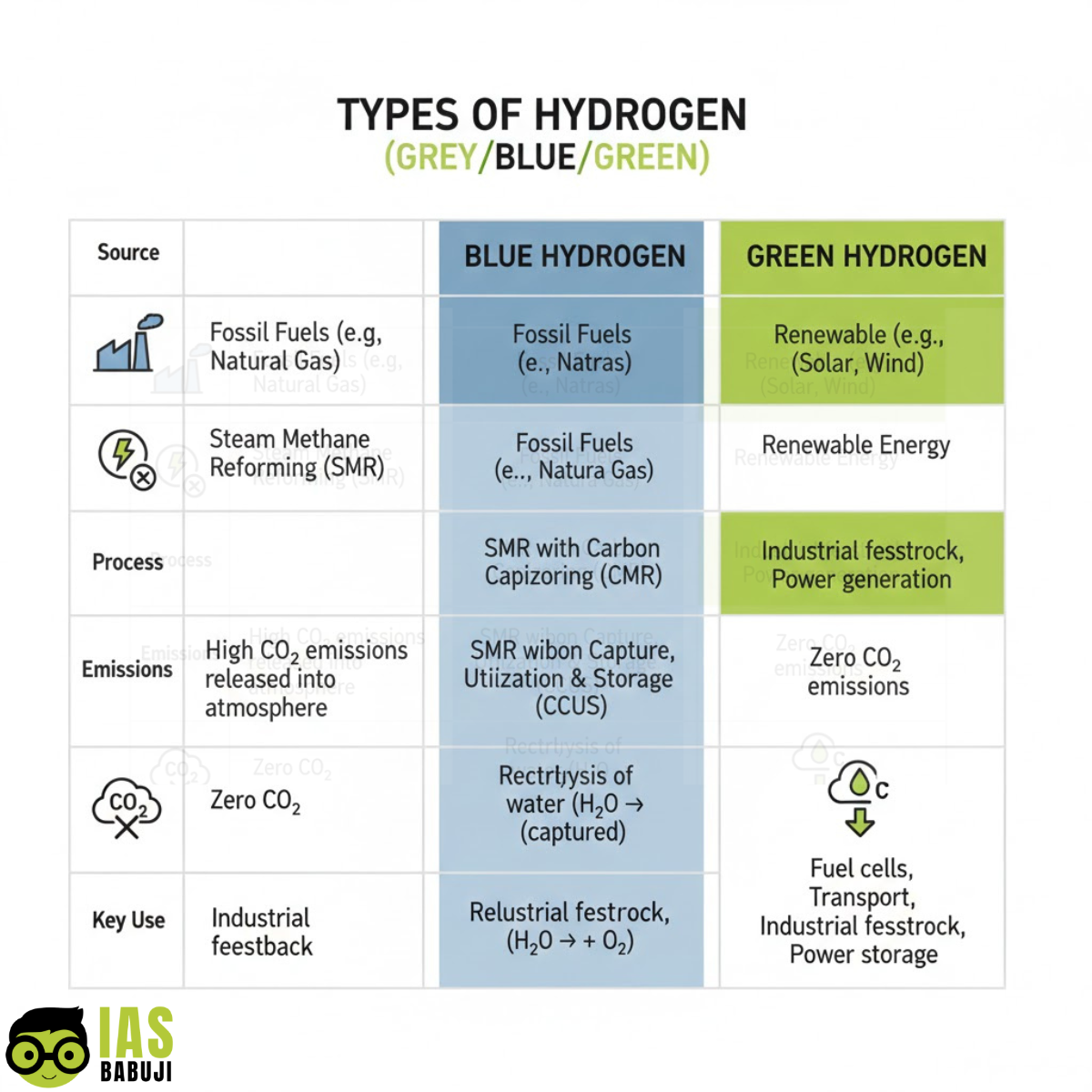
| Type | Production Source | Carbon Emissions |
|---|---|---|
| Grey Hydrogen | Natural gas | High CO₂ |
| Blue Hydrogen | Natural gas + carbon capture | Medium/Lower |
| Green Hydrogen | Renewable electricity + electrolysis | Very low/near zero |
10. What is Green Hydrogen?
Green hydrogen is produced by splitting water into hydrogen and oxygen using renewable electricity (solar/wind).
This process is called:
Electrolysis
Water (H₂O) → Hydrogen (H₂) + Oxygen (O₂)
Since renewable energy is used, carbon emissions are minimal.
11. Why Green Hydrogen is Important for India?
Green hydrogen is critical because it can decarbonise sectors where electricity alone cannot work.
These are called:
Hard-to-Abate Sectors
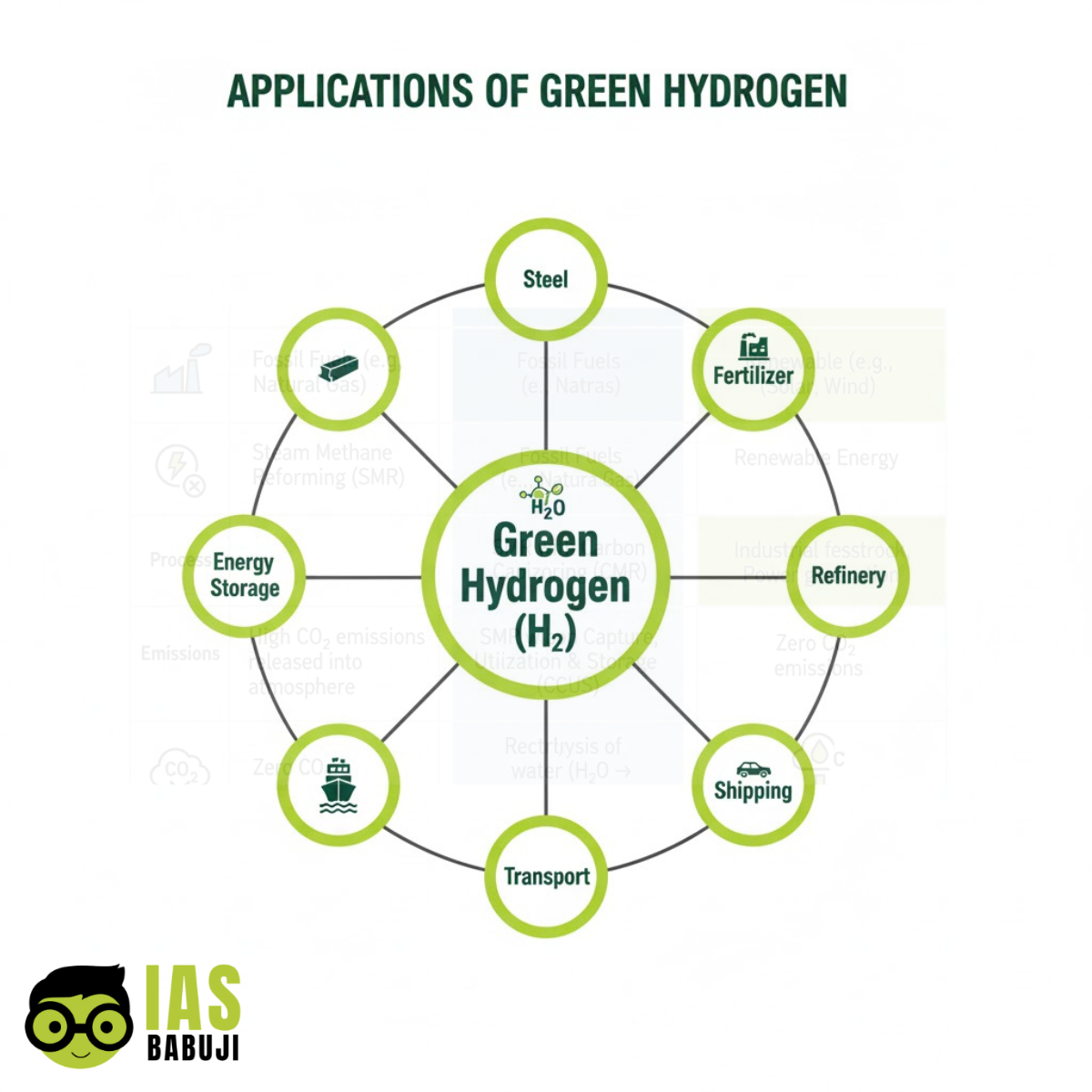
- steel production
- cement
- fertilisers (ammonia)
- refineries
- heavy transport
- shipping
- aviation (future fuels)
12. Applications of Green Hydrogen (UPSC GS 3)
1) Fertiliser Sector
Hydrogen is used to make ammonia.
Green hydrogen can reduce emissions from fertiliser plants.
2) Refineries
Refineries use hydrogen for desulphurisation.
Green hydrogen can reduce refinery emissions.
3) Steel Industry
Green hydrogen can replace coal/coke in steel making through:
-
direct reduced iron (DRI)
4) Clean Mobility
- hydrogen fuel cell buses
- trucks
- long-distance transport
5) Energy Storage
Green hydrogen can store renewable energy for long durations, solving:
-
intermittency of solar/wind
13. Green Hydrogen and India’s Energy Security
India imports a large share of:
- crude oil
- natural gas
If India produces green hydrogen domestically using:
- solar
- wind
it can reduce:
- import dependence
- forex outflow
- energy vulnerability
14. Green Hydrogen and Carbon Markets: How They Link
This is an excellent UPSC answer point.
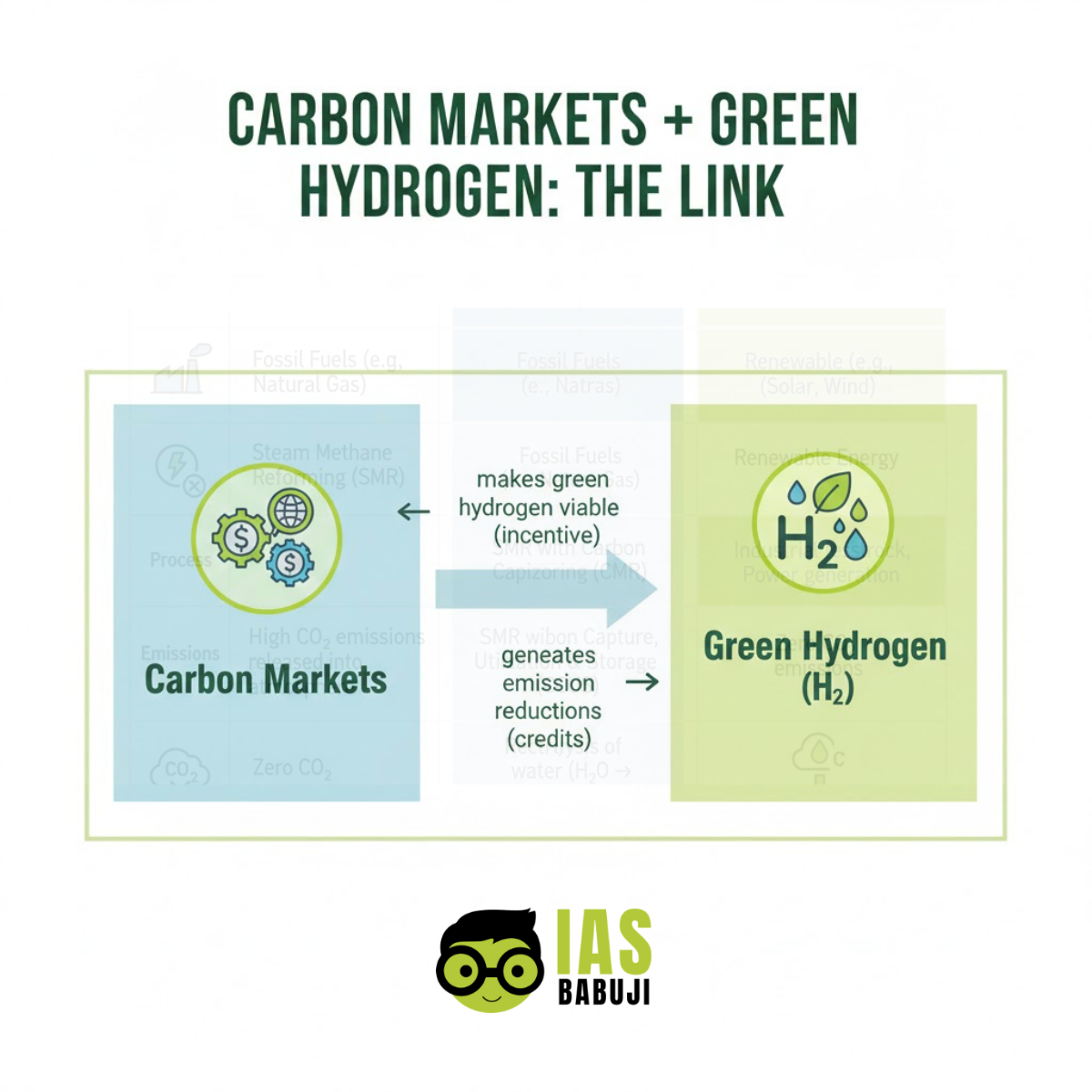
Green hydrogen projects can:
- reduce industrial emissions
- generate carbon credits (in future)
- become eligible under carbon market mechanisms
Carbon markets can:
- make green hydrogen financially viable
- provide revenue through emission reduction credits
Thus, carbon markets and green hydrogen are complementary pillars of the green economy.
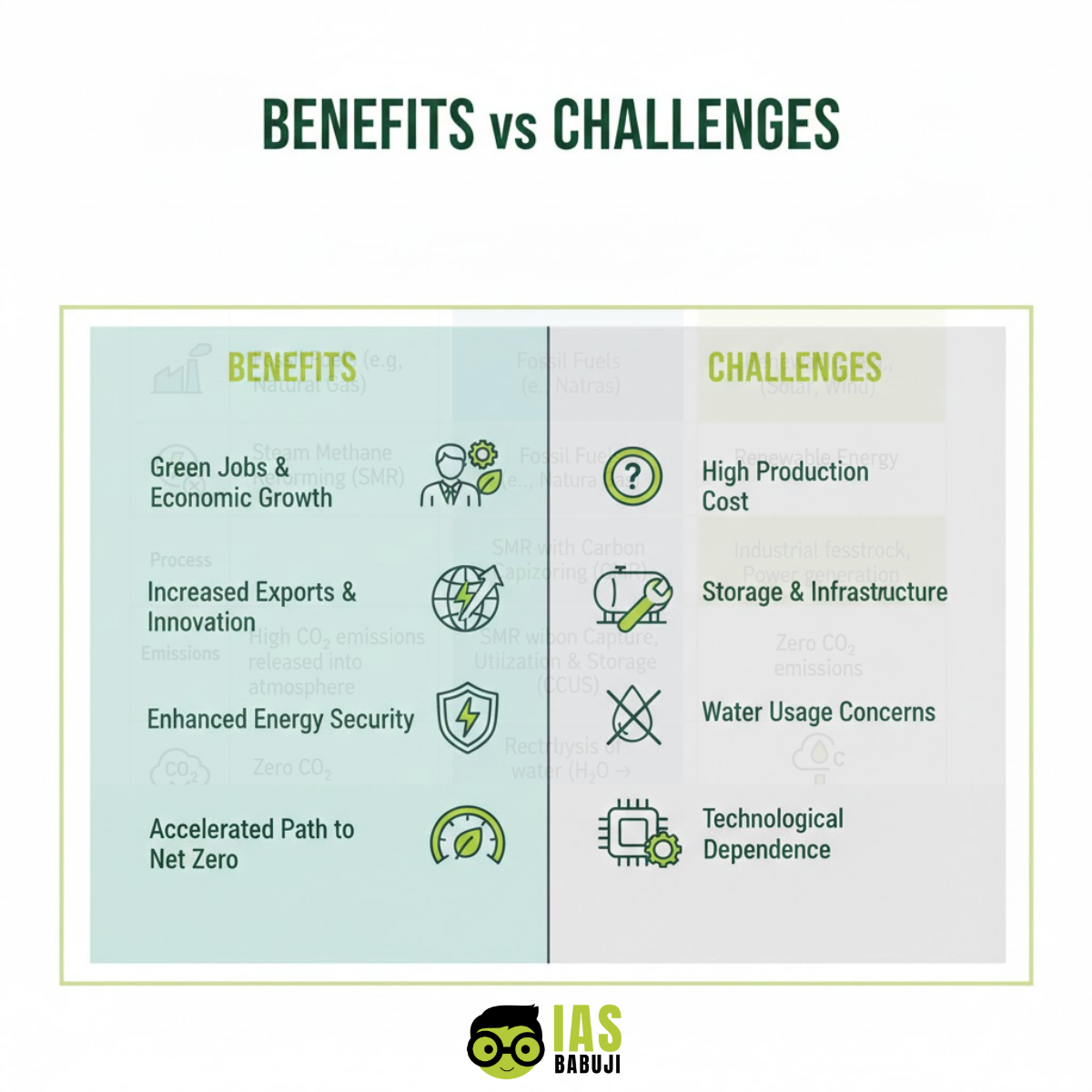
15. Benefits of Green Hydrogen for India’s Green Economy
1) Industrial Transformation
Helps shift India’s heavy industries toward low-carbon manufacturing.
2) Job Creation
Green hydrogen ecosystem creates jobs in:
- electrolyser manufacturing
- renewable energy projects
- pipelines and storage
- maintenance and operations
3) Global Export Opportunity
India can become a supplier of:
- green hydrogen
- green ammonia
- green methanol
especially to energy-importing regions.
4) Supports Net Zero 2070
Green hydrogen is essential for a long-term net-zero strategy.
16. Challenges in Green Hydrogen (UPSC Mains Points)
1) High Cost
Green hydrogen is currently more expensive than grey hydrogen.
2) Electrolyser Technology Dependence
India needs to build:
- domestic electrolyser manufacturing
- supply chains for key minerals
3) Water Requirement
Electrolysis needs water.
In water-stressed regions, this must be planned carefully.
4) Storage and Transport Issues
Hydrogen is difficult to store due to:
- low density
- safety challenges
- need for special pipelines
5) Renewable Power Availability
Green hydrogen needs:
- large renewable energy capacity
- stable grid systems
17. Green Economy: India’s Strategic and Economic Implications
A strong green economy gives India:
1) Global Climate Leadership
India can lead Global South with:
- affordable green solutions
- scalable clean tech
2) Stronger Manufacturing Base
Green manufacturing improves:
- global competitiveness
- compliance with carbon standards
3) Reduced Pollution
Green economy policies reduce:
- air pollution
- industrial emissions
- health costs
4) Better Resilience
Green investments improve resilience against:
- heat waves
- floods
- droughts
18. Way Forward
To accelerate India’s green economy, India should focus on:
- strong MRV system for carbon markets
- transparent carbon credit registry
- carbon pricing stability
- incentives for green hydrogen adoption
- R&D in electrolysers and storage
- integrated planning for water + renewables
- global partnerships for technology transfer
Conclusion
A green economy is not just an environmental necessity for India—it is a major opportunity for economic transformation. Carbon markets provide a market-based mechanism to reduce emissions, while green hydrogen offers a breakthrough solution for decarbonising heavy industries and long-distance transport.
Together, they represent the backbone of India’s transition toward:
- sustainable growth
- energy security
- global competitiveness
- net-zero future
FAQs
Q1. What is a green economy?
A green economy is a low-carbon, resource-efficient economy that promotes sustainable development and reduces environmental risks.
Q2. What is a carbon credit?
A carbon credit is a certificate representing the reduction or removal of 1 tonne of CO₂ equivalent.
Q3. What is the difference between compliance and voluntary carbon markets?
Compliance markets are mandatory and regulated, while voluntary markets are optional and driven by sustainability goals.
Q4. What is green hydrogen?
Green hydrogen is hydrogen produced using renewable electricity through electrolysis of water, with minimal carbon emissions.
Q5. Why is green hydrogen important for India?
It helps decarbonise hard-to-abate sectors like steel, fertilisers, refineries, and heavy transport.
Q6. What are the main challenges in green hydrogen?
High cost, electrolyser technology dependence, water requirement, storage issues, and renewable energy availability.