Can Economic Growth Alone Deliver Social Justice in India: Balancing Economic Expansion with Equity and Welfare
For UPSC Aspirants | GS II | GS III | GS IV | Essay
Introduction
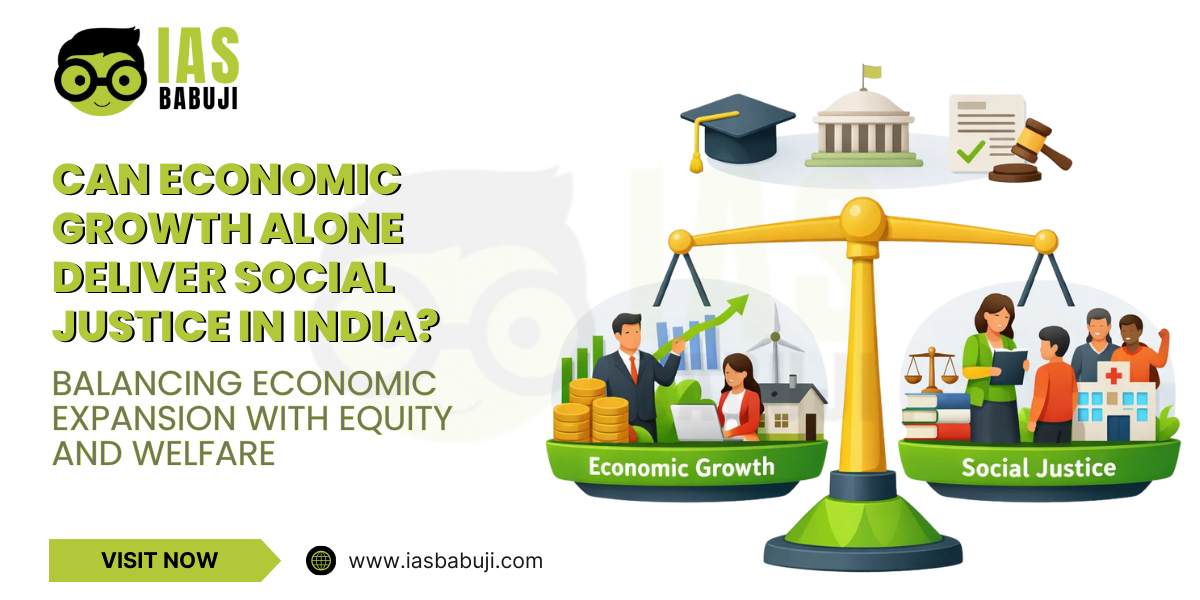
Economic growth is often seen as the primary pathway to national progress. A growing economy increases income, expands opportunities, and strengthens state capacity. However, India’s development journey shows that growth alone does not automatically translate into social justice. While GDP expansion can reduce poverty and generate resources, it does not guarantee fair distribution, dignity, or equal access to opportunities. The critical question, therefore, is whether economic growth by itself can ensure social justice—or whether structural reforms, governance quality, and ethical policymaking are equally essential. This article critically examines the relationship between economic growth and social justice in the Indian context, offering insights relevant for UPSC GS papers and essay writing.
Meaning of Social Justice in the Indian Context
Social justice in India is rooted in the constitutional vision of equality, dignity, and welfare. It implies:
- Equal opportunities regardless of caste, gender, religion, or region
- Reduction of historical disadvantages and discrimination
- Access to basic needs such as education, health, employment, and housing
- Protection of marginalized communities through affirmative action
- Ensuring dignity, rights, and socio-economic mobility
Social justice goes beyond economic outcomes—it reflects fairness in social structures, public institutions, and governance.
How Economic Growth Contributes to Social Justice
Economic growth plays an important role in advancing social justice through multiple channels:
1. Poverty Reduction
- Higher national income expands employment and household earnings
- Growth-driven poverty decline has lifted millions above the poverty line
2. Employment Generation
- Industrial expansion and service-sector growth create livelihood opportunities
- MSMEs and startups contribute to income mobility
3. Human Capital Development
- Increased public and private investment in education, health, and skill development
- Growth enhances access to technology and learning resources
4. Fiscal Capacity for Welfare
- Higher tax revenues strengthen funding for welfare schemes
- Government gains greater capacity to finance social safety nets
Thus, economic expansion creates necessary conditions for improving living standards—but not always sufficient conditions for justice.
Limitations of a Growth-Only Approach
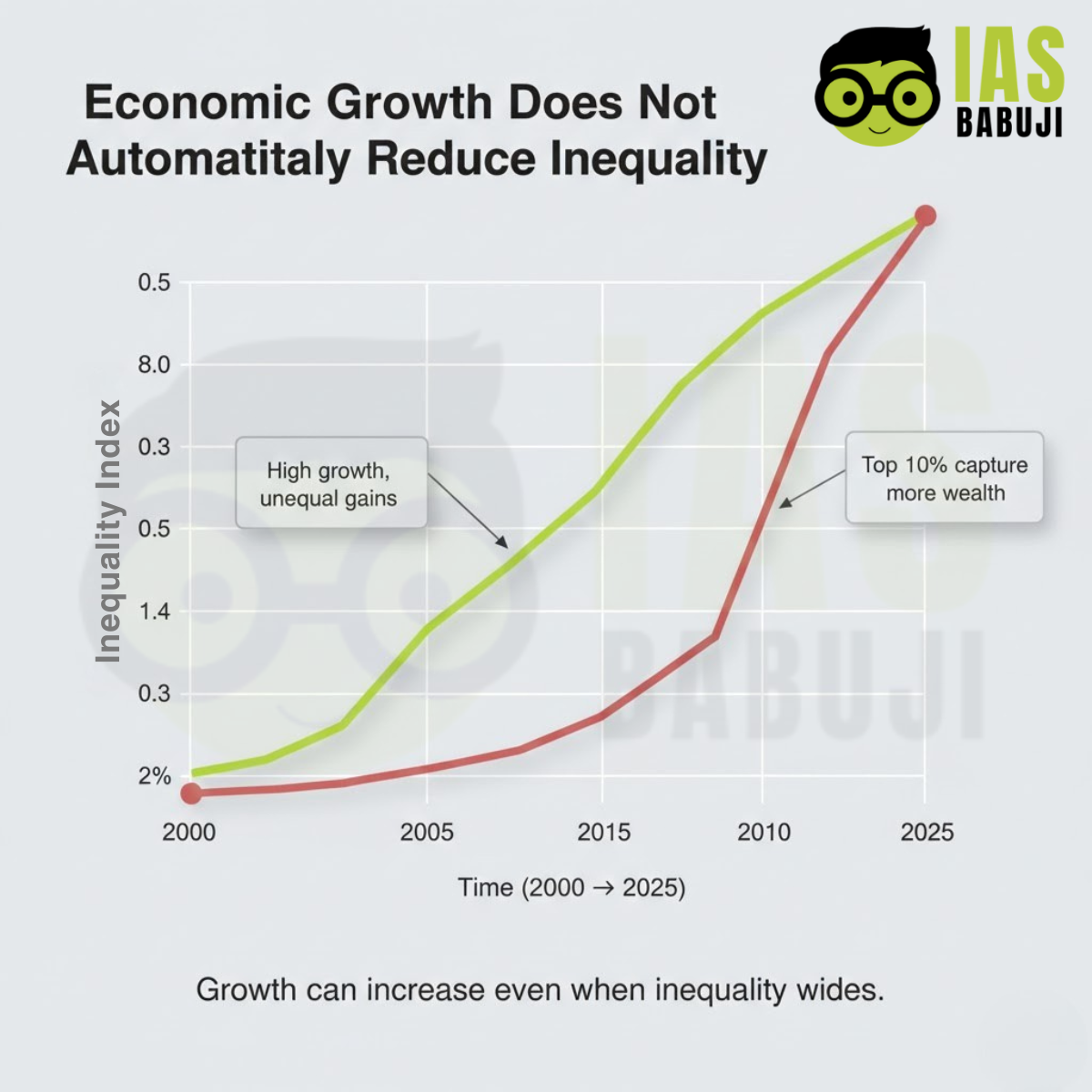
Despite rapid growth phases, India continues to face persistent social inequities.
1. Rising Inequality
- Wealth and income concentration among top segments
- The benefits of growth are often skewed toward urban and elite populations
2. Jobless Growth
- GDP expansion without proportional employment creation
- Automation and capital-intensive industries limit labor absorption
3. Regional Disparities
- Uneven development across states and districts
- Backward regions remain trapped in poverty despite national growth
4. Urban–Rural Divide
- Infrastructure and income gaps between cities and villages
- Rural distress persists despite macroeconomic progress
5. Social Exclusion
- Marginalized communities face structural barriers to growth and benefits
- Gender inequality and caste-based discrimination limit participation
These challenges show that growth without redistribution and reform can deepen social divides.
Role of Governance and Policy in Achieving Social Justice
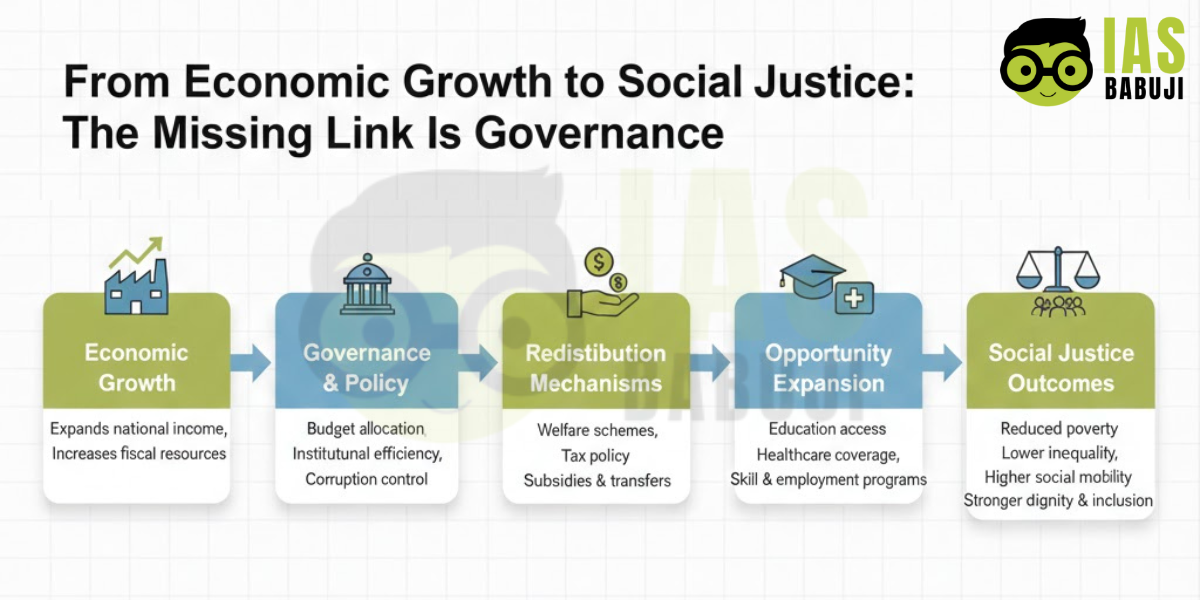
Economic growth must be complemented by strong governance and inclusive policies:
Welfare and Social Protection
- Food security, housing, pensions, and employment guarantees reduce vulnerability
Affirmative Action
-
Reservations and targeted interventions promote equity for disadvantaged groups
Financial Inclusion
-
Access to banking, credit, insurance, and digital finance supports empowerment
Education and Health Investments
-
Public investment improves human capital and long-term mobility
Institutional Accountability
-
Transparent, corruption-free governance ensures fair resource allocation
Effective governance ensures that growth benefits reach all segments of society.
Ethical and Moral Dimensions of Social Justice
Beyond economics and policy, social justice has a strong ethical foundation:
- Fairness and equity in opportunity and outcome
- State responsibility to protect vulnerable populations
- Intergenerational justice to ensure sustainable development
- Moral obligation to correct historical injustices
- Human dignity as a guiding principle of policymaking
A purely market-driven approach risks ignoring ethical considerations, reinforcing the need for values-based governance.
Global & Indian Examples
High-Growth but Unequal Economies
- Some fast-growing economies exhibit high inequality and social unrest
- Growth without social investment has widened class divides globally
India’s Mixed Outcomes
- Rapid economic expansion alongside persistent malnutrition, unemployment, and inequality
- Success stories in poverty reduction contrast with challenges in education and healthcare access
India’s experience highlights that growth is necessary but not transformative without inclusive policies.
Way Forward: Growth with Justice
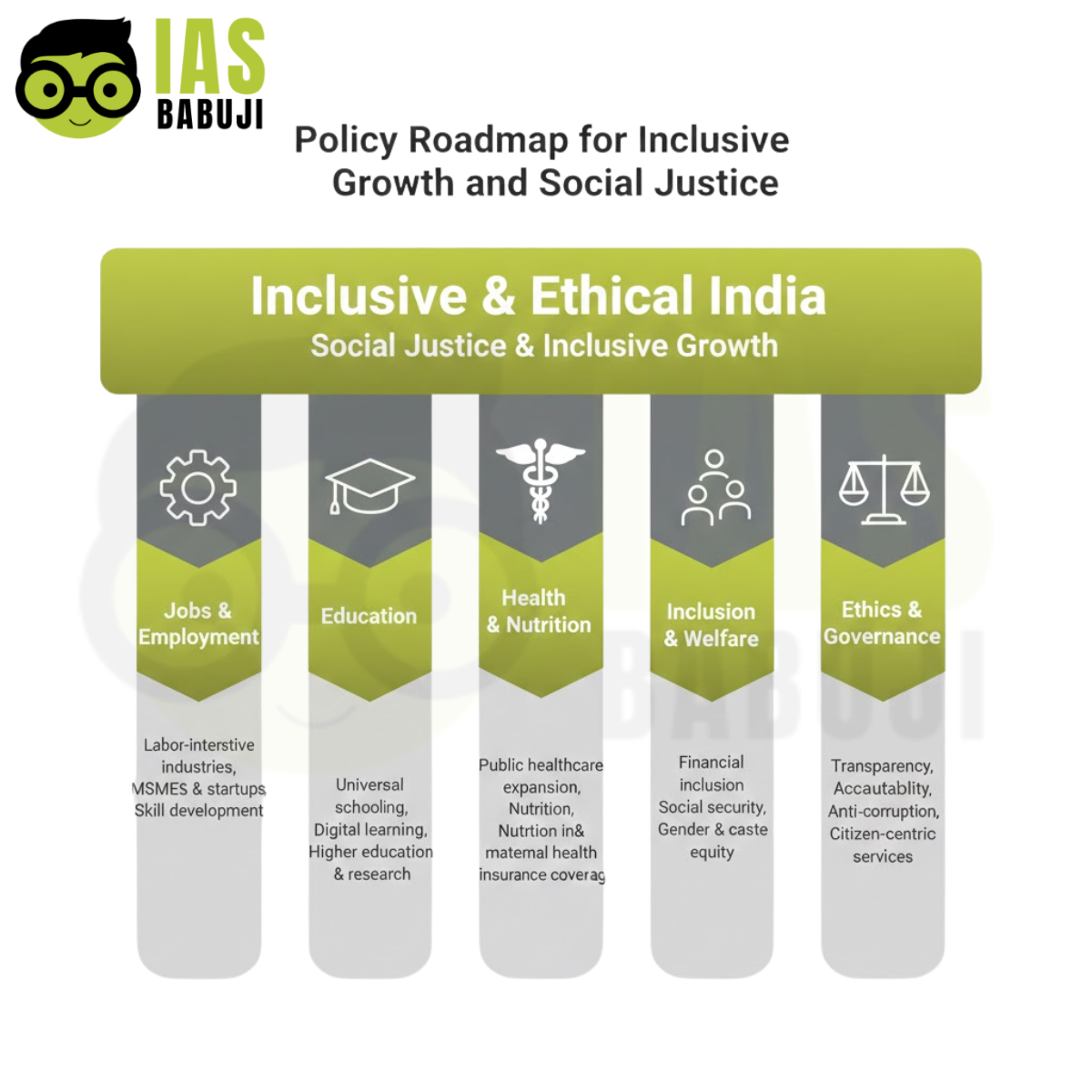
To ensure meaningful social justice, India must pursue a human-centric development model:
Inclusive Growth
- Focus on job-rich, labor-intensive sectors
- Strengthen rural and MSME-led development
Human-Centric Development
- Prioritize education, health, nutrition, and social security
- Measure progress beyond GDP using quality-of-life indicators
Institutional and Governance Reforms
- Improve service delivery and reduce corruption
- Strengthen local governance and accountability
Ethical and Responsible Policymaking
- Balance efficiency with fairness
- Ensure sustainable, intergenerational equity
Conclusion
Economic growth is an essential driver of national progress, but it cannot, by itself, guarantee social justice in India. While growth expands opportunities and strengthens state capacity, its benefits often remain uneven due to inequality, regional imbalances, and structural exclusion. Social justice requires more than wealth creation—it demands effective governance, inclusive policies, ethical responsibility, and institutional reform. A balanced approach that integrates economic expansion with social equity, human capital investment, and moral accountability is crucial for sustainable development. For India, the future lies not in choosing between growth and justice, but in aligning the two through inclusive, ethical, and people-centered policymaking.
FAQs
1. Can economic growth alone eliminate poverty in India?
Growth helps reduce poverty but cannot fully eliminate it without targeted welfare and inclusion policies.
2. Why does inequality rise despite economic growth?
Unequal access to education, jobs, and capital leads to uneven benefit distribution.
3. How does governance influence social justice?
Strong governance ensures fair resource allocation, effective welfare delivery, and accountability.
4. Why is ethics important in economic policymaking?
Ethics ensures fairness, protects vulnerable groups, and promotes sustainable development.
5. Is inclusive growth more important than rapid growth?
Yes. Sustainable progress depends on growth that benefits all sections of society.
6. How is this topic relevant for UPSC essays?
It integrates economy, polity, ethics, and governance—ideal for analytical and balanced answers.