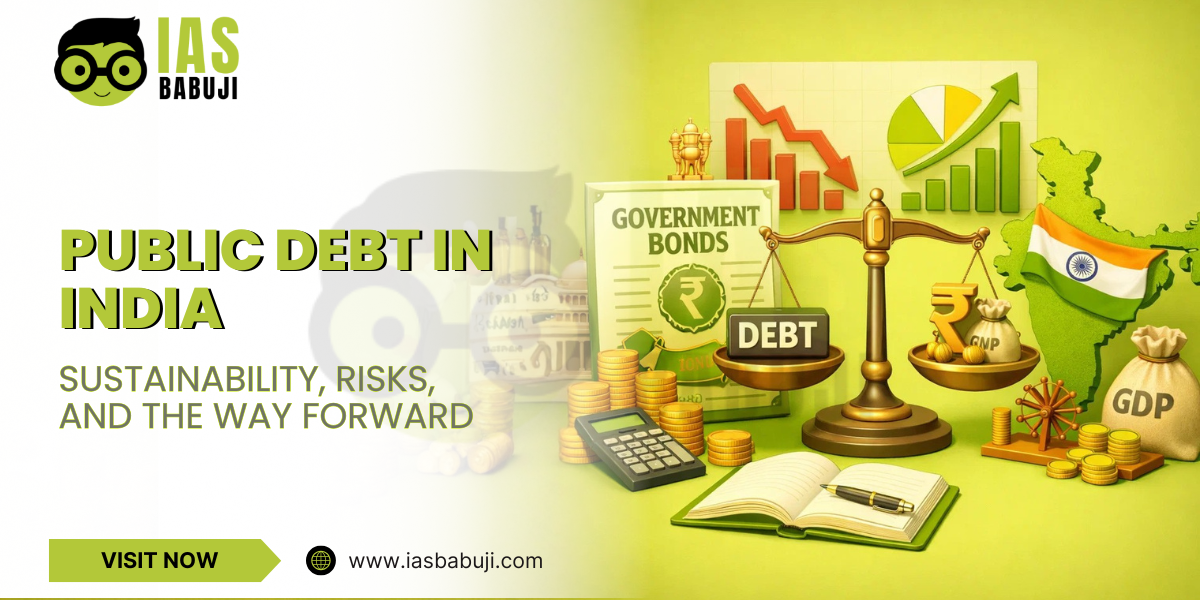
Public Debt in India: Sustainability, Risks, and the Way Forward
Introduction
Public debt is a critical indicator of a country’s fiscal health and long-term economic sustainability. In India, rising public debt has emerged as a major policy concern due to increasing government expenditure, fiscal deficits, and external shocks such as economic slowdowns and pandemics. While public borrowing enables the government to finance development and welfare programmes, excessive debt can constrain fiscal space, increase interest burdens, and pose risks to macroeconomic stability. For UPSC aspirants, public debt is a core GS Paper III topic with strong linkages to fiscal deficit, FRBM Act, inflation, and intergenerational equity.
What is Public Debt?
Public debt refers to the total outstanding liabilities of the government arising from borrowings to finance budgetary deficits.
It includes:
- Internal debt
- External debt
Types of Public Debt in India
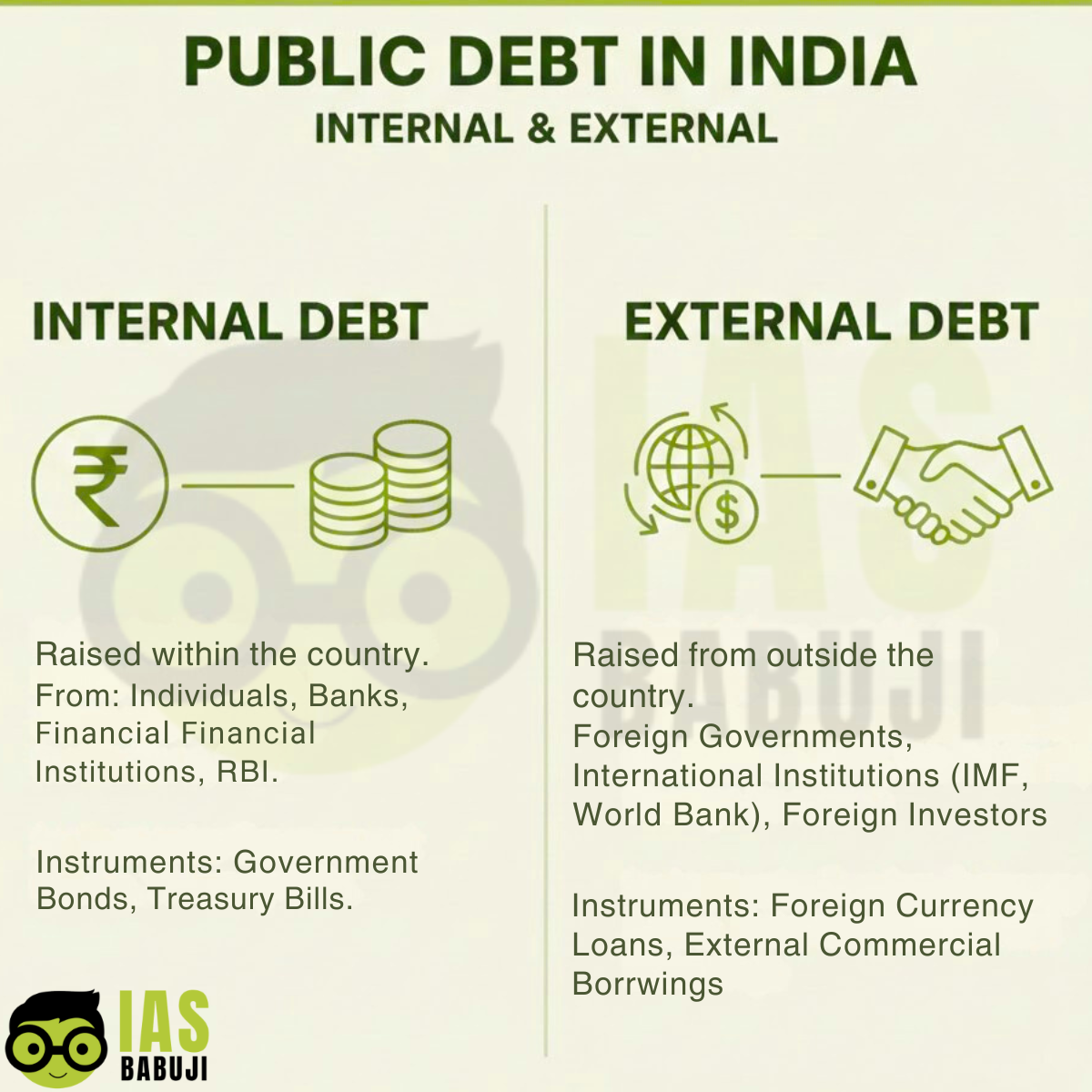
Internal Debt
- Market loans
- Treasury bills
- Government bonds
- Small savings
External Debt
- Multilateral and bilateral loans
- External commercial borrowings
- Sovereign bonds
Internal debt forms the major share of India’s public debt.
Measurement of Public Debt
- Expressed as a percentage of GDP
- Key indicator of debt sustainability
- Tracked by the Ministry of Finance and the RBI
Trends in India’s Public Debt
Pre-Reform Period
-
High debt due to structural fiscal imbalances
Post-1991 Reforms
- Improved fiscal discipline
- Gradual decline in the debt-GDP ratio
Post-Global Financial Crisis
-
Counter-cyclical borrowing increased debt
Pandemic and Post-Pandemic Phase
- Sharp rise due to fiscal stimulus and welfare spending
- Gradual consolidation strategy underway
Causes of Rising Public Debt in India
Persistent Fiscal Deficits
- Revenue expenditure dominance
- Interest payments accumulation
Economic Slowdowns
- Reduced revenue collections
- Higher welfare spending
Structural Constraints
- Narrow tax base
- Subsidy burden
External Shocks
-
Global crises and commodity price volatility
Public Debt and Economic Growth
Positive Role
- Financing infrastructure and human capital
- Supporting counter-cyclical fiscal policy
Negative Impacts
- Crowding out of private investment
- Higher interest payments
- Reduced fiscal flexibility
Debt quality matters more than debt size.
Public Debt and Inflation
- Monetisation risks
- Excessive borrowing may fuel inflation
- Strong monetary-fiscal coordination is required
Debt Sustainability in India
What is Debt Sustainability?
Ability to service debt without compromising growth and welfare.
Indicators
- Debt-GDP ratio
- Interest payment to revenue ratio
- Primary balance
India’s debt remains largely domestic and long-term, improving sustainability.
FRBM Act and Debt Management
FRBM Act, 2003
- Ensures fiscal discipline
- Sets debt and deficit targets
FRBM Review Committee
- Recommended debt-GDP ceiling
- Emphasised counter-cyclical flexibility
Ethical and Intergenerational Concerns
- Burden on future taxpayers
- Intergenerational equity
- Responsible fiscal governance
High public debt raises ethical questions about fiscal prudence and accountability.
Role of RBI in Debt Management
- Managing government borrowing
- Conducting open market operations
- Maintaining financial stability
Way Forward
- Strengthening revenue mobilisation
- Rationalising expenditure
- Prioritising capital expenditure
- Improving debt transparency
- Adhering to the fiscal consolidation path
Conclusion
Public debt plays a crucial role in financing India’s development and responding to economic shocks. However, rising debt levels can constrain fiscal flexibility, increase interest burdens, and pose risks to long-term macroeconomic stability. The key challenge for India lies not in eliminating public debt but in managing it responsibly. Ensuring that borrowings are channelled towards productive capital expenditure, strengthening revenue generation, and maintaining fiscal discipline under the FRBM framework are essential for debt sustainability. Moreover, ethical considerations of intergenerational equity and transparency must guide public borrowing decisions. A balanced and growth-oriented debt management strategy will enable India to harness public debt as a developmental tool rather than allowing it to become a structural vulnerability.
FAQs
What is public debt?
Public debt is the total borrowing of the government to finance fiscal deficits.
Is high public debt harmful?
High debt can be harmful if it undermines growth and fiscal sustainability.
What is the debt-GDP ratio?
It measures public debt relative to the size of the economy.
Which UPSC paper covers public debt?
GS Paper III (Indian Economy).