
New Criminal Laws Explained of India in Depth: Bharatiya Nyaya Sanhita (BNS), Bharatiya Nagarik Suraksha Sanhita (BNSS), Bharatiya Sakshya Adhiniyam (BSA)
Introduction
On 1 July 2024, India entered a new era of criminal justice by replacing the three core colonial criminal laws—the IPC (1860), CrPC (1973), and the Indian Evidence Act (1872)—with fully restructured and modernized legislation:
- Bharatiya Nyaya Sanhita (BNS), 2023 – Replaces IPC
- Bharatiya Nagarik Suraksha Sanhita (BNSS), 2023 – Replaces CrPC
- Bharatiya Sakshya Adhiniyam (BSA), 2023 – Replaces Evidence Act
These new laws redesign crime definitions, investigation procedures, police powers, trial timelines, classification of evidence, and citizens’ rights. This transformation has deep implications for governance, federalism, rights-based jurisprudence, and the functioning of Indian democracy.
This article provides the most comprehensive explanation, including:
- Why were the reforms needed
- Key features of each law
- What changed, what remained, and what was added
- Case-based illustrations
- Constitutional and human-rights concerns
- Detailed UPSC relevance
- In-depth comparison tables
- Multiple flowcharts
1. Background and Context: Why Replace 160-Year-Old Colonial Laws?
India’s criminal laws were built during British rule to serve a colonial objective: maintaining order through punishment and control.
Problems with the Old System
- Laws designed for colonial governance
IPC defined offences but offered little perspective on the rights of victims, rehabilitation, or justice delivery. - CrPC allowed excessive police power with insufficient accountability.
- Evidence Act was outdated
It did not adequately define or recognize modern digital evidence, cybercrime, electronic contracts, metadata, blockchain transactions, or encrypted communication. - Growing pendency
Over 3.5 crore cases are pending in courts; delays in investigation were common due to lack of timelines. - New forms of crime
Cyber fraud, ransomware attacks, deepfake crime, organized online networks, and crypto-related offences needed modern definitions. - Lack of a victim-centric approach
Crimes against women and children required clearer, stricter, and more enforceable legal frameworks. - Global alignment
Countries worldwide have reformed their evidence and criminal procedure laws. India needed harmonization.
2. Bharatiya Nyaya Sanhita (BNS), 2023 – Modern Replacement of IPC
BNS contains 358 sections, compared to IPC’s 511 sections—many merged, restructured, or removed.
2.1 Key Structural Changes
a. Simplification of Offence Categories
IPC had overlapping offences. BNS merges redundant sections for clarity and consistency.
b. Reclassification of Crimes
Crimes against the state, women, children, organized crime, and terrorism are prioritized.
c. Introduction of “Community Service”
A major reform. Minor offences may now result in community service instead of imprisonment—aligning with global restorative justice models.
2.2 Major Substantive Changes in BNS
1. Terrorism Introduced Within the Penal Code
For the first time, terrorism is defined under general penal law.
A terrorist act includes:
- Acts intended to threaten unity, integrity, sovereignty
- Use of explosives, biological agents, or weapons
- Financing of terrorism
This aligns BNS with modern anti-terror frameworks.
2. Organized Crime Expanded
Now includes:
- Cyber fraud syndicates
- Extortion gangs
- Data-theft groups
- Human trafficking networks
- Land mafia networks
Punishment for organized crime extends to life imprisonment and death in certain cases.
3. Mob Lynching Recognized as a Specific Offence
Earlier covered under general murder provisions.
Now defined separately, with punishments up to the death penalty.
4. Stronger Protection for Women & Children
- Stricter punishment for gangrape
- Rape of minors carries severe terms
- Voyeurism, stalking, and digital harassment expanded
- Sexual exploitation by persons in authority is clearly defined
5. Sedition Removed but Replaced with “Acts Endangering Sovereignty”
IPC Section 124A (sedition) removed.
However, a new provision criminalizes:
- Secessionism
- Armed rebellion
- Subversive activities
- Calls for separatism
Critics argue it may operate similarly to sedition.
2.3 Case-Based Illustration: How BNS Changes Prosecution
Old Scenario (IPC)
Suppose a digital fraud gang runs an extortion racket online.
They would be charged under multiple IPC sections but prosecution was fragmented.
New Scenario (BNS)
They can be charged directly under organized crime provisions with stronger penalties and easier investigation consolidation.
3. Bharatiya Nagarik Suraksha Sanhita (BNSS), 2023 – Procedure Reform
BNSS contains 531 sections (slightly more than CrPC’s 484), with major reform in the procedural framework.
3.1 Key Improvements in BNSS
1. Digital Transformation
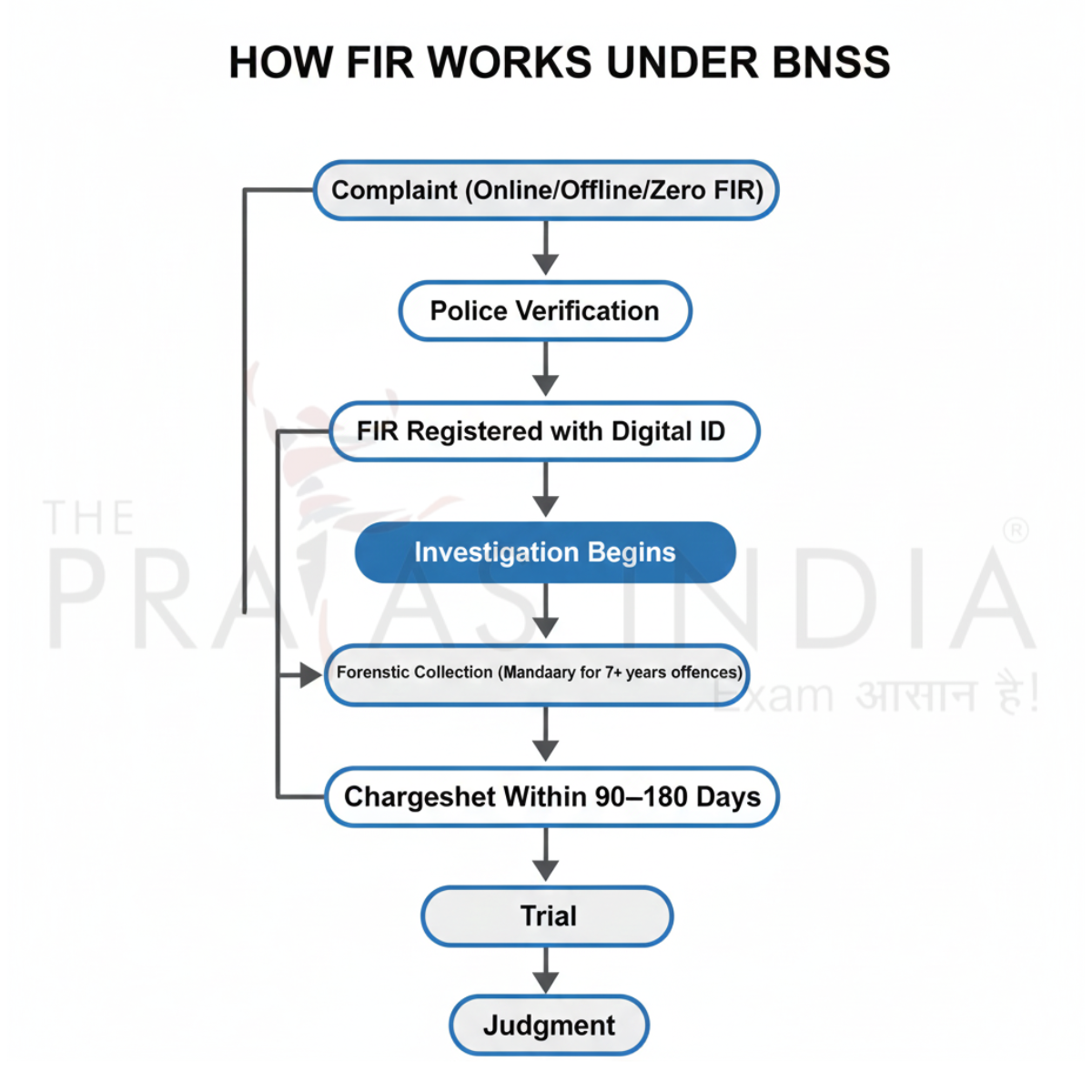
- FIR through the electronic medium
- e-Summons, digital warrants
- Video-recorded statements
- Electronic case diaries
- Online tracking for complainants (victim portal)
2. Time-Bound Investigation
- Chargesheet within 90 days (extendable to 180 days)
- For offences punishable with over 7 years, forensic investigation is mandatory
3. Zero FIR Legalized
A person can file an FIR in any police station, regardless of jurisdiction—ensuring immediate action.
4. Police Conduct & Accountability
- Regular audits of police stations
- Mandatory record of arrests
- CCTV and digital tracking of custody
5. Handcuffing Permitted in Defined Serious Offences
This includes:
- Terrorism
- Organized crime
- Murders
- Heinous crimes
Critics argue this may lead to misuse by police.
3.2 Trial Procedure Changes
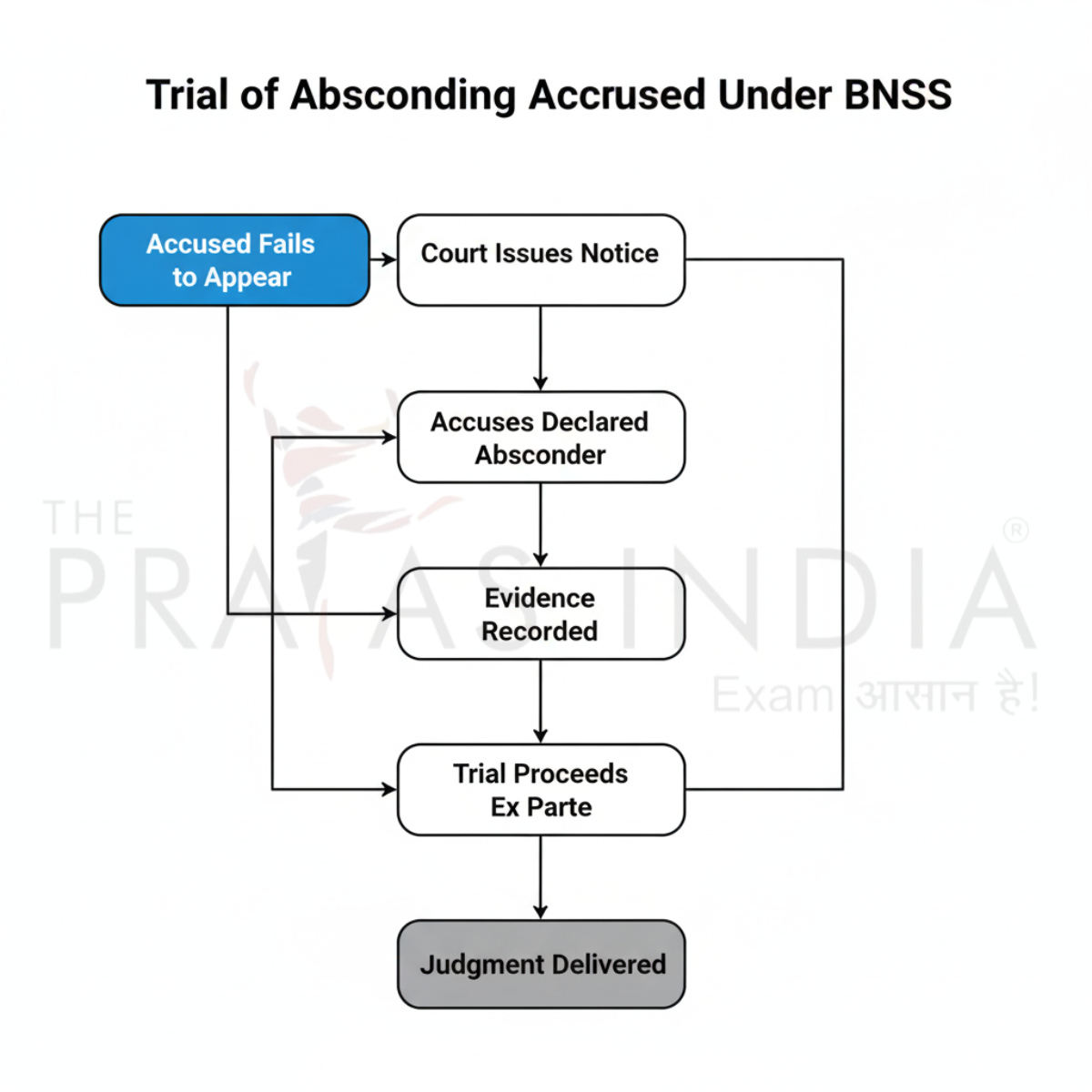
1. Trials For Absconders
Courts may conduct trials in absentia if accused deliberately avoids appearance.
2. Speedy Trials
BNSS institutionalizes:
- Daily hearings where required
- No adjournments except for recorded reasons
- Strict timelines for judgment delivery
3. Greater Role of Forensics
India will see a major expansion in forensic infrastructure.
3.3 Case Study: How Trial Timeline Improves
A woman files a complaint of assault.
Under CrPC:
- Statements recorded manually
- No strict timeline
- Evidence collection slow
- Frequent adjournments
Under BNSS:
- Statement recorded via video
- Chargesheet within 90 days
- Victim can track progress
- Police must justify delays
4. Bharatiya Sakshya Adhiniyam (BSA), 2023 – Digital Evidence Revolution
BSA retains essence of the Evidence Act but reorganizes and modernizes it.
4.1 Key Transformations
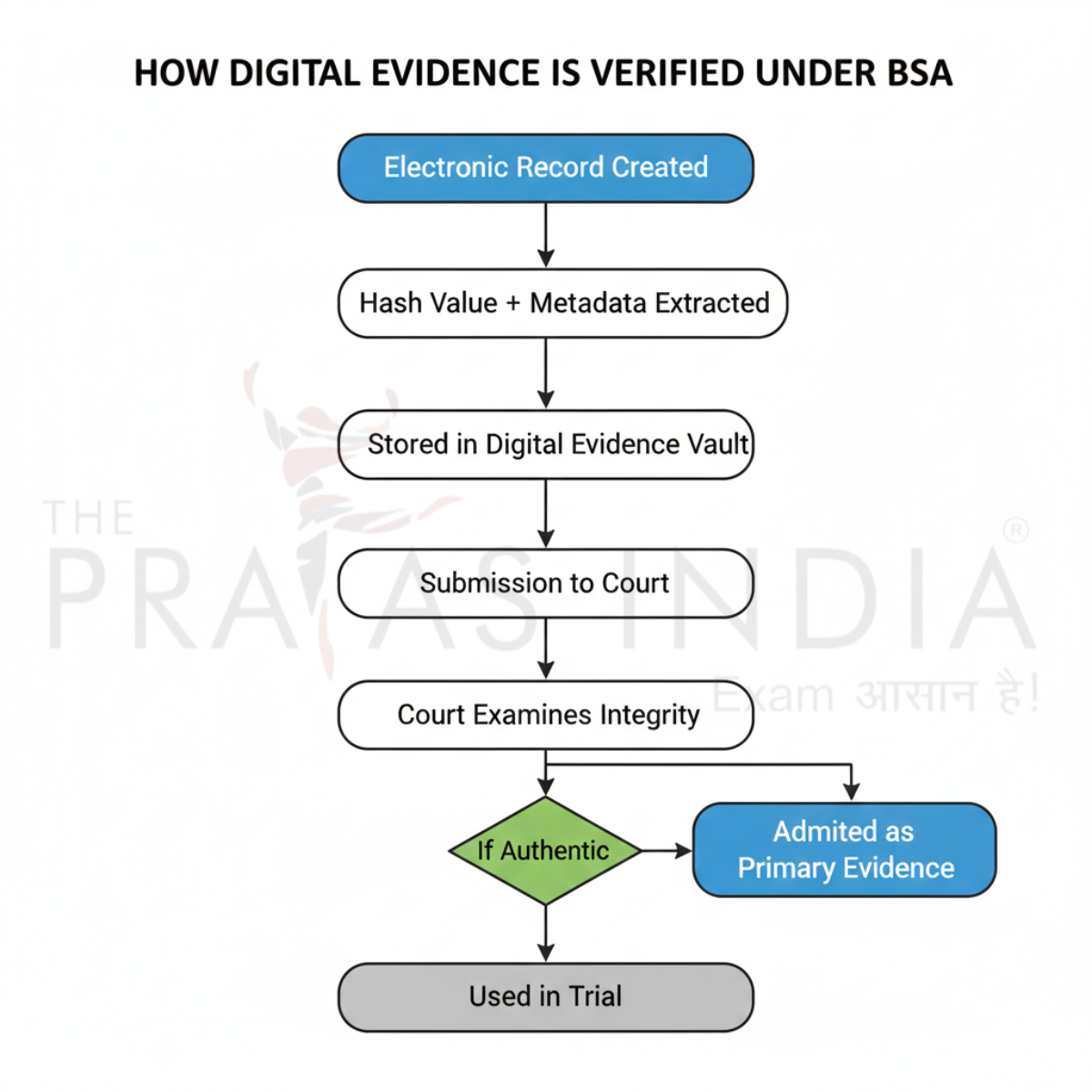
1. Electronic Evidence = Primary Evidence
Digital files no longer require cumbersome certification procedures as under Evidence Act Section 65B.
Includes:
- Emails
- WhatsApp chats
- CCTV footage
- Cloud server logs
- GPS metadata
- Call detail records
2. Metadata Now Recognized
Every digital artifact has metadata that helps prove integrity and authenticity.
3. Strengthened Chain of Custody
Forensic documentation ensures digital evidence is protected from tampering.
4. Rules for Hostile Witnesses
Courts are empowered to act against deliberate falsehood.
5. Massive Detailed Comparison Tables
| Dimension | IPC (Old) | BNS (New) |
|---|---|---|
| Foundational Philosophy | Punishment-oriented colonial law | Citizen-centric justice delivery |
| No. of Sections | 511 | 358 |
| Sedition | Defined under 124A | Removed; replaced with sovereignty offences |
| Terrorism | No definition | Defined comprehensively |
| Mob Lynching | Not defined | Explicitly defined with severe punishment |
| Organized Crime | Not covered | Expanded coverage incl. cyber gangs |
| Community Service | No provision | Introduced |
CrPC vs BNSS
| Feature | CrPC | BNSS |
|---|---|---|
| FIR Registration | Requires physical presence | Online FIR + Zero FIR allowed |
| Case Tracking | No provision | Online victim portal |
| Investigation Timeline | No strict limits | 90–180 day timeline |
| Forensic Mandate | Optional | Mandatory for 7+ year offences |
| Electronic Summons | Not recognized | Digitally authorized |
| Handcuffing | Restricted by SC judgments | Permitted in defined offences |
Evidence Act vs BSA
| Aspect | Evidence Act (Old) | BSA (New) |
|---|---|---|
| Electronic Records | Secondary evidence; complex authentication | Primary evidence; metadata-based validation |
| Witness Protection | Weak | Strengthened provisions |
| Chain of Custody | Not emphasized | Mandatory and structured |
| Digital Forensics | Minimal provisions | Detailed recognition |
6. Detailed Flowcharts
6.1 How FIR Works Under BNSS
6.2 How Digital Evidence Is Verified Under BSA
6.3 Trial of Absconding Accused Under BNSS
7. Constitutional Debates & Criticisms
7.1 Potential for Misuse of “Against the State” Section
Experts fear it could resemble sedition in effect.
7.2 Handcuffing Provisions
This may conflict with Supreme Court’s rulings on dignity of accused.
7.3 Digital Divide
Rural communities may face challenges with online processes.
7.4 Forensic Capacity
India’s forensic labs are currently inadequate to handle large volume.
7.5 Federal Concerns
Criminal law is a concurrent subject; states feel insufficiently consulted.
8. Impact on Policing, Judiciary & Citizens
Policing
- Higher accountability
- More digital workflows
- Forensic dependency increases
Judiciary
- Faster case disposal expected
- Higher reliance on video and digital evidence
Citizens
- Easier FIR filing
- Better victim rights
- Increased transparency
9. UPSC Relevance
Prelims
Expect questions like:
- Which new law replaced IPC?
- Features of BNSS
- Significance of electronic evidence
Mains (GS2, GS3)
Topics include:
- Criminal justice reform
- Citizen-centric governance
- Police reforms
- Digital evidence jurisprudence
- Rights vs security debate
Essay
Themes:
- Technology and rule of law
- Shifting from colonial to modern legal frameworks
Interview
Practical questions such as:
- What are the challenges in implementing BNSS?
- Do new laws threaten civil liberties?
Conclusion
India’s transition to the new criminal laws—BNS, BNSS, and BSA—is historic. These laws modernize definitions of crime, strengthen digital evidence, enforce strict investigation timelines, improve victim rights, and address contemporary threats like terrorism and cybercrime.
However, implementation will determine their true success. India needs large-scale training of police personnel, expansion of forensic labs, digital infrastructure, legal literacy among citizens, and judicial sensitivity to rights and accountability.
For UPSC aspirants, these laws are among the most important topics for the next several years, forming key content for Prelims, Mains, Essays, and the Interview.